
El Capitan Theatre: Hollywood’s Stage House That Became a Movie Palace |
The ornate theater across from the Chinese Theatre began with live drama before finding a second life as one of Hollywood Boulevard’s great movie houses. |
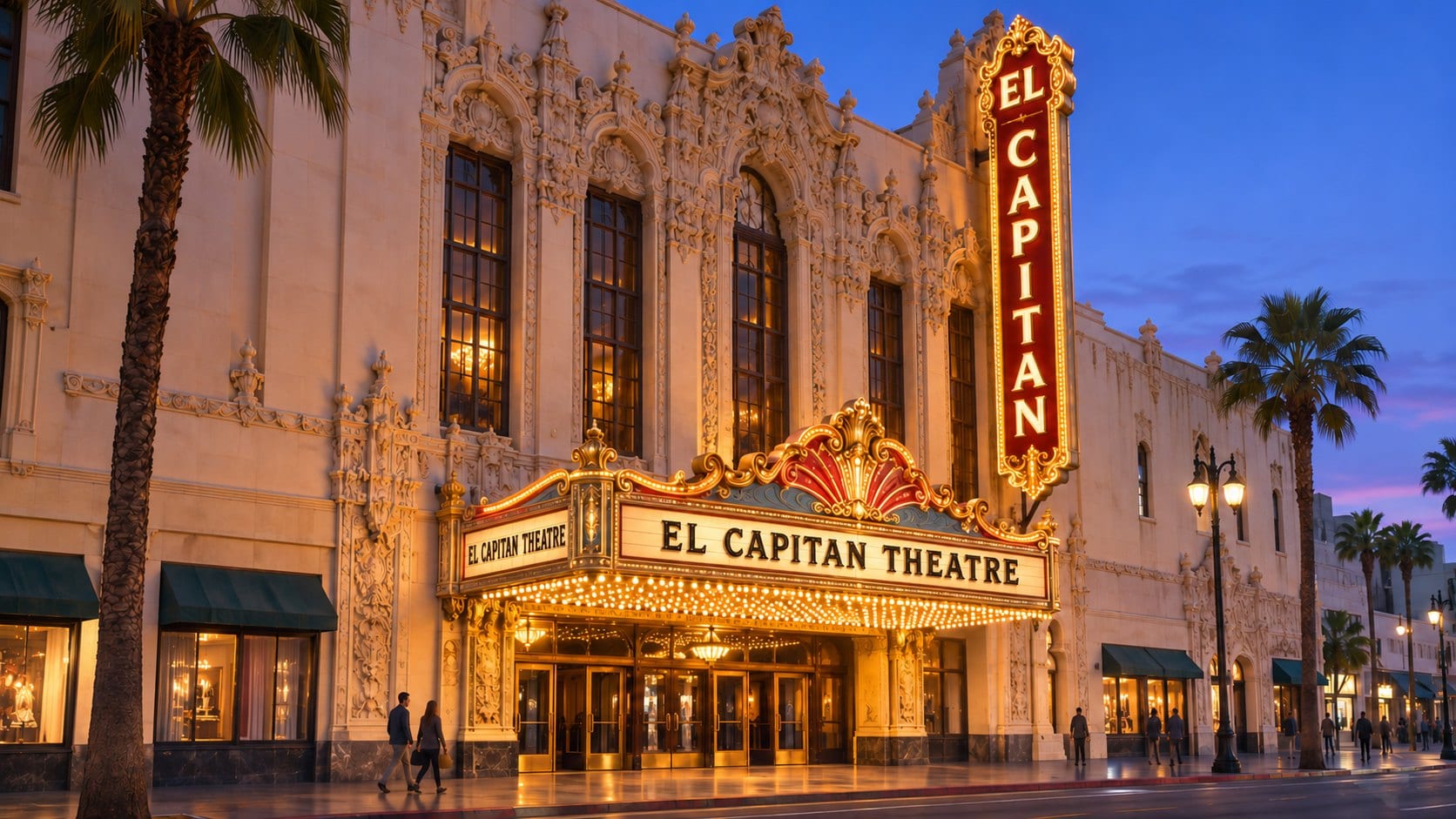
Across Hollywood Boulevard from the Chinese Theatre stands a building that has changed jobs without losing its sense of occasion. The El Capitan Theatre opened in 1926, but it did not begin as the Disney movie palace many visitors know today. It began with live theater. That first purpose helps explain the building’s enduring personality. A theater designed to draw attention toward a stage carries a different story from one built simply to put a screen in front of an audience. At El Capitan, the stage came first. Hollywood’s movie business eventually supplied the next act. Hollywood Wanted a Real StageWhen Did El Capitan Theatre Open?El Capitan opened on May 3, 1926, with Charlot’s Revue, featuring Jack Buchanan, Gertrude Lawrence and Beatrice Lillie. The theatre’s official history records its beginnings as Hollywood’s largest legitimate theater, with 1,550 seats. “Legitimate theater” was the period’s term for a house presenting live stage productions. It was a description of the entertainment, not a judgment about the movies playing elsewhere. Was El Capitan Originally a Live Theater?Yes. Its original identity was rooted in spoken drama and live performance. That distinction tells us something about Hollywood in the 1920s: the growing film industry had not erased the appeal of a real stage. The architecture made its own entrance. Stiles O. Clements designed the Spanish Colonial exterior, while G. Albert Lansburgh created the elaborate, East Indian-inspired interior. Outside and inside offered different visual worlds, united by a determination to make an evening feel special. A ticket bought a performance, but the surroundings helped set the mood before anyone spoke. That sense of anticipation remains central to understanding why these ornate entertainment buildings mattered. |
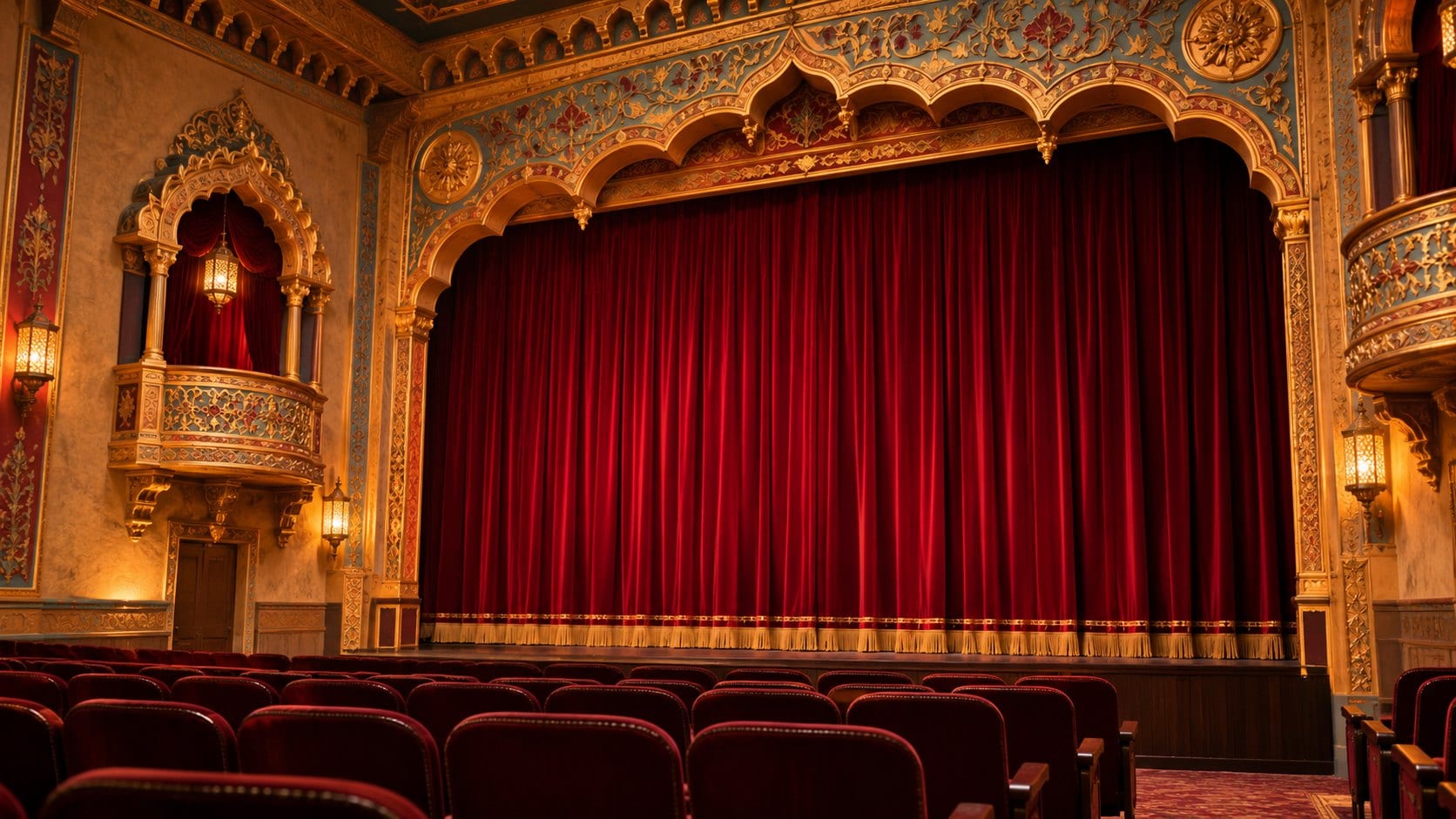 AI-generated editorial illustration inspired by El Capitan Theatre’s live-stage origins; interior details are interpretive, not a documentary photograph. |
From Stage Plays to Screen StoriesWhen Did El Capitan Become a Movie Theater?The turning point came in 1941, when El Capitan hosted the Hollywood premiere of Orson Welles’ Citizen Kane. The Los Angeles Historic Theatre Foundation documents the subsequent renovation and its March 1942 reopening as the Hollywood Paramount. The remodeling introduced a streamlined Art Moderne appearance. El Capitan’s name changed along with its presentation, turning the former playhouse toward first-run films. That was not unusual. Grand theaters often survived by adapting to changing audiences and entertainment habits. A building might remain in the same place while the experience inside it changed considerably. What makes this story especially interesting is the return journey. The older theatrical character would eventually become something worth recovering rather than covering up. The Restoration Brought Back the DramaWho Restored El Capitan Theatre?The Walt Disney Company and Pacific Theatres launched a restoration in 1989, led by theater designer Joseph J. Musil. The work recovered historic details, including ornamental plasterwork and auditorium opera boxes. El Capitan reopened on June 19, 1991, with the premiere of Disney’s The Rocketeer. The result was not a frozen museum piece. The restored building returned to work, allowing audiences to experience its theatrical surroundings during a movie presentation. |
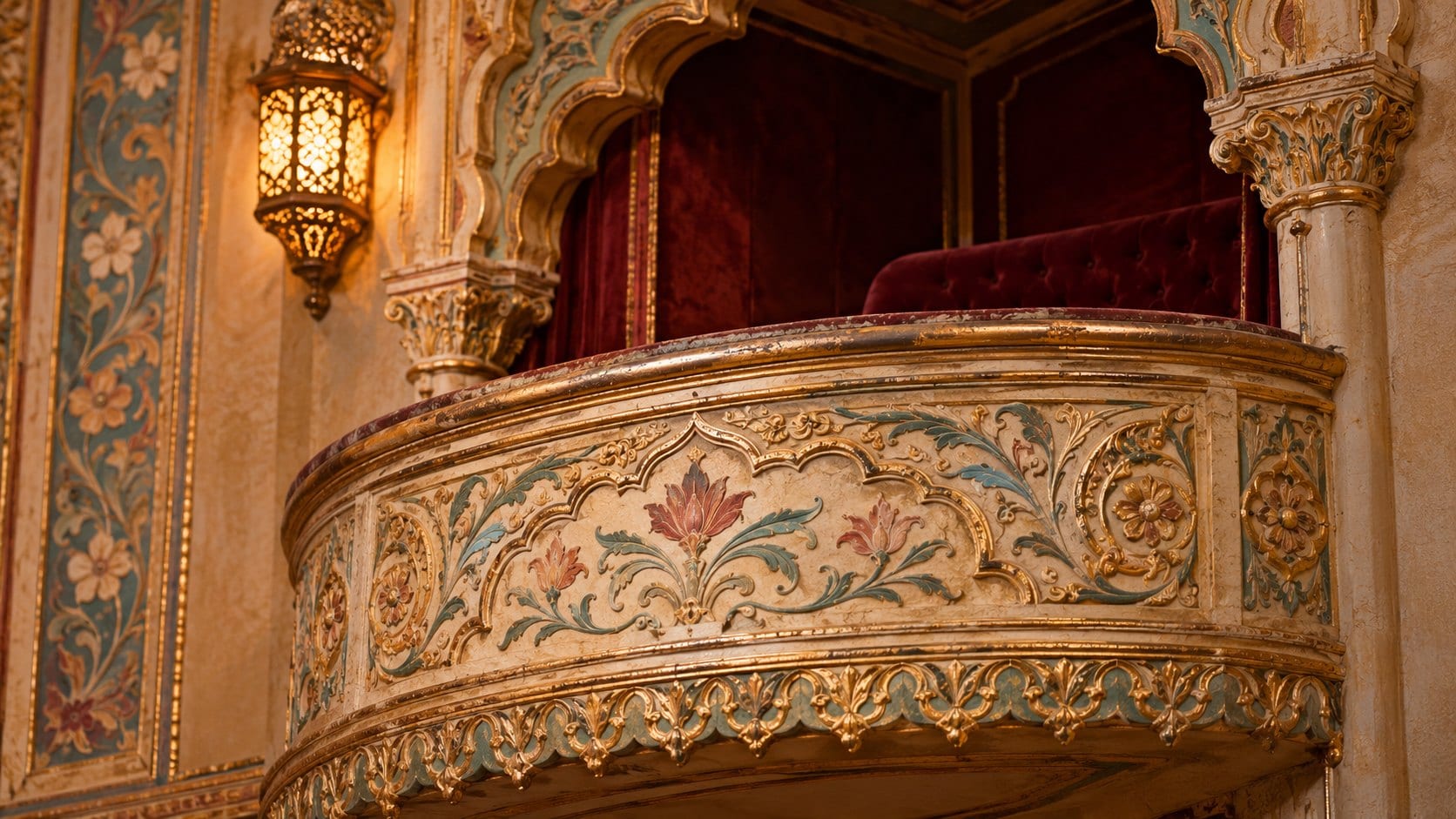 AI-generated editorial illustration inspired by El Capitan Theatre’s decorative plasterwork and opera boxes; architectural details are interpretive, not a documentary photograph. |
What Makes El Capitan Theatre Special?Its distinction is the combination of a live-theater origin, a movie-house reinvention and a restoration that made the earlier character visible again. The theater’s history is not a straight line. It changed names, changed its interior and changed the kind of entertainment it offered. Those shifts make the building a useful way to read Hollywood itself: a neighborhood where reinvention can preserve a place, even as it alters it. |
For readers planning a visit, the experience depends on the particular presentation. Consult the theatre’s official film showings and event listings for current programming and ticket details. A historic setting is a lasting attraction; a particular film or added event is not a permanent promise. Two Movie Palaces Facing Each OtherWhere Is El Capitan Theatre in Hollywood?El Capitan stands at 6838 Hollywood Boulevard, across the boulevard from the Chinese Theatre. Its location makes it part of a larger conversation between Hollywood’s entertainment landmarks. The connection goes deeper than their addresses. Developer Charles E. Toberman helped bring El Capitan, the Chinese and the Egyptian theatres to Hollywood Boulevard. El Capitan opened in 1926 for live performance; the Chinese followed in 1927 as a movie palace. Their different beginnings capture a neighborhood making room for both stage and screen. HLP’s Chinese Theatre story explores how its handprints became a Hollywood landmark. Farther east, the Egyptian Theatre offers another chapter in that story. HLP’s Egyptian Theatre feature explores a different movie-palace identity along the same boulevard. |
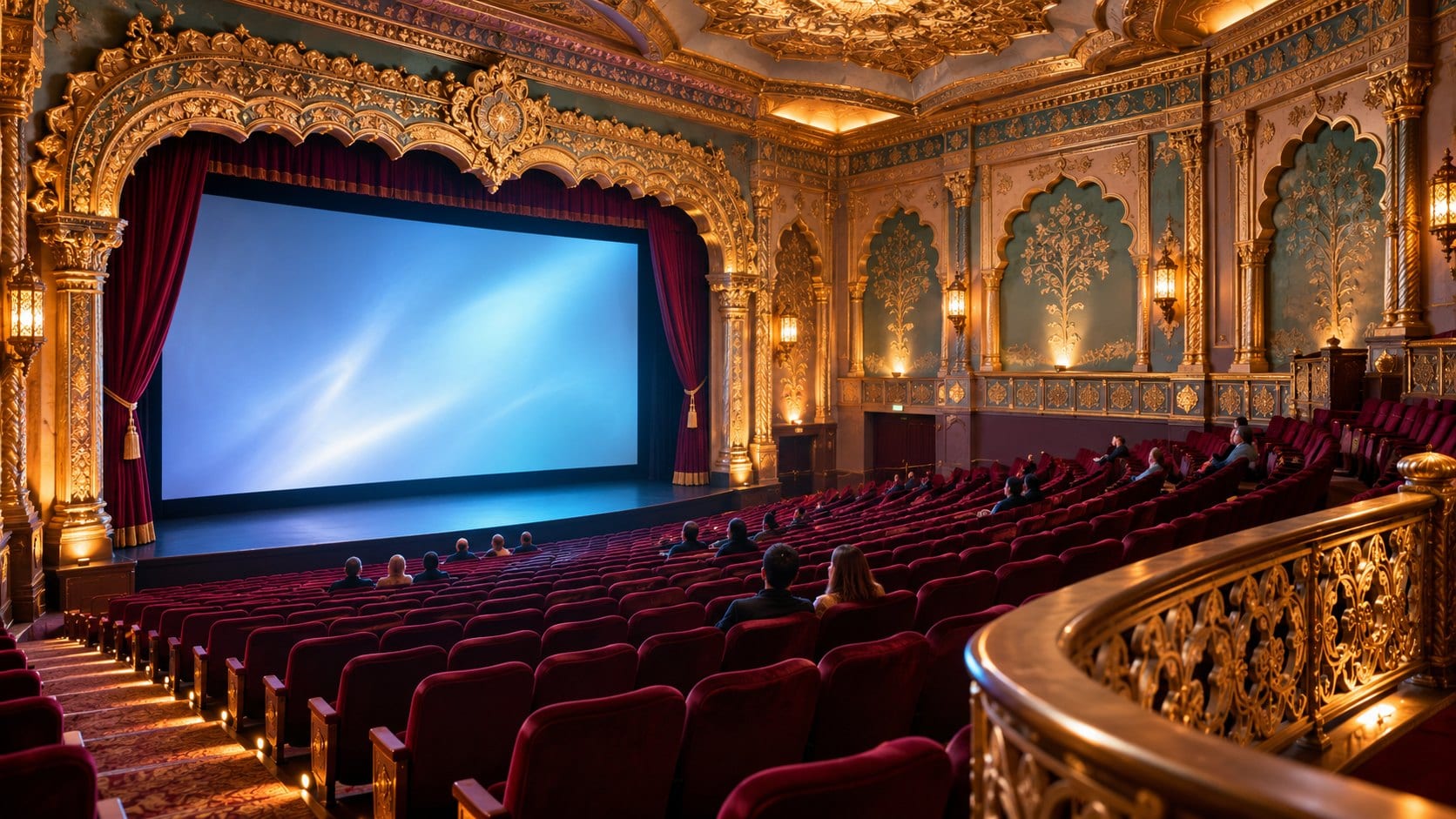 AI-generated editorial illustration of a movie-palace audience and auditorium inspired by El Capitan Theatre; architectural details are interpretive, not a documentary photograph. |
Seeing these places as individual buildings is rewarding. Seeing them together reveals how much attention Hollywood once gave to the setting around a performance: the facade, the entrance and the feeling that ordinary street life was giving way to an occasion. El Capitan’s special contribution is that it remembers the stage too. Before movies became its main attraction, this house opened its doors for live performers. The screen came later. The sense of theater never really left. |
0 Comments
Join the conversation
Be the first to comment
Share your thoughts above.