
The Egyptian Theatre: Where Hollywood Invented the Movie Premiere |
Long before a Hollywood premiere meant barricades, cameras and a red carpet, one extraordinary night in 1922 helped teach the movie business how to turn a film opening into an event. |
Hollywood has a funny way of making traditions feel as if they have always existed.
The red carpet. The photographers. The crowd outside. The giant premiere where seeing the movie is only half the event.
But somebody had to discover that a movie could have an opening night almost as dramatic as the movie itself.
And one of the places where Hollywood learned how to make a movie opening feel enormous is still standing on Hollywood Boulevard.
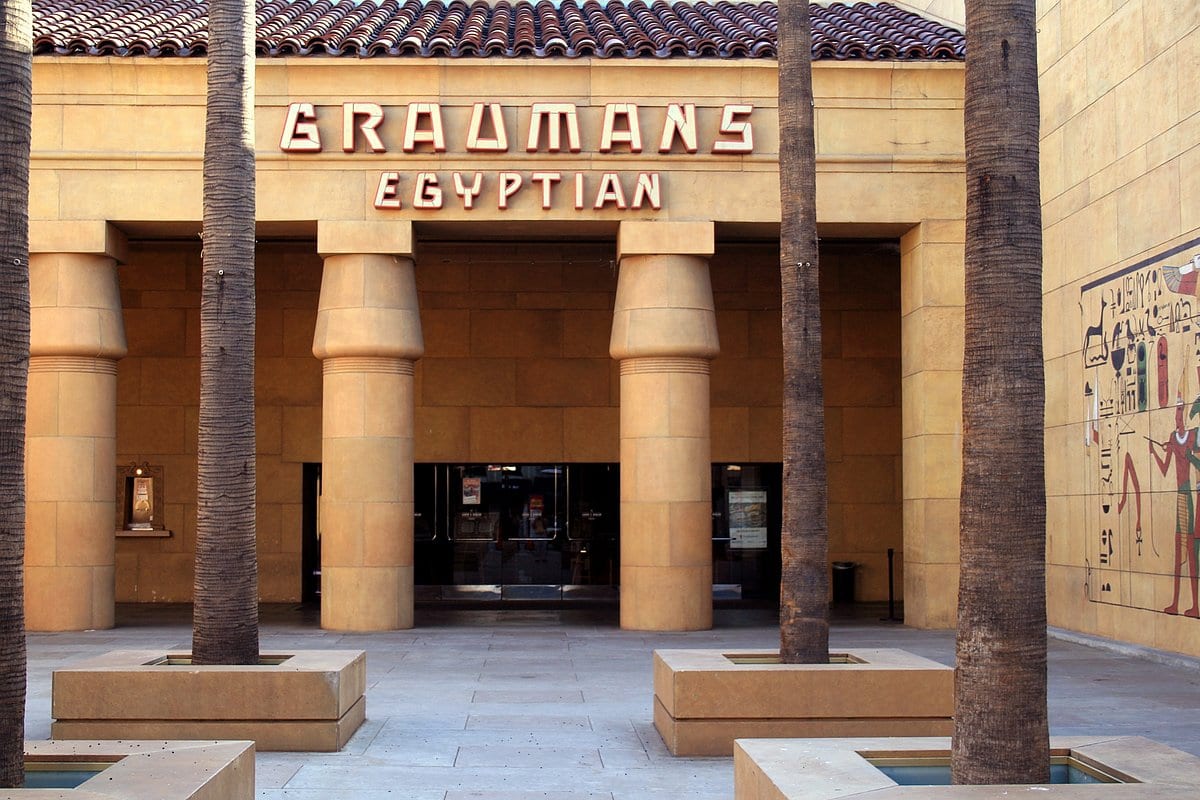
It's the Egyptian Theatre at 6712 Hollywood Boulevard.
A Movie Palace Arrives in 1922The Egyptian opened in 1922, during the silent-film era, when Hollywood was becoming both an industry and an idea.
The theatre was created as an elaborate movie palace—a place where going to the movies could feel like entering another world before the film even began.
Walk through the courtyard and you understand the point immediately.
Massive columns, Egyptian-inspired decoration and a long approach to the auditorium make the entrance itself part of the experience.
And then Hollywood used that space to create something new.
The Night the Premiere Became a SpectacleIn 1922, the Egyptian hosted the premiere of Robin Hood, starring Douglas Fairbanks.
The American Cinematheque describes it as the world's first movie premiere.
That sounds almost ordinary now because Hollywood premieres became such a familiar part of the entertainment business.
But imagine the idea when it was new.
A movie wasn't simply opening.
Hollywood was putting on a show before the show.
The arrival. The crowd. The lights. The stars. The sense that something important was happening and you wanted to be close enough to see it.
A century later, that formula is so familiar we barely question where it came from.
|
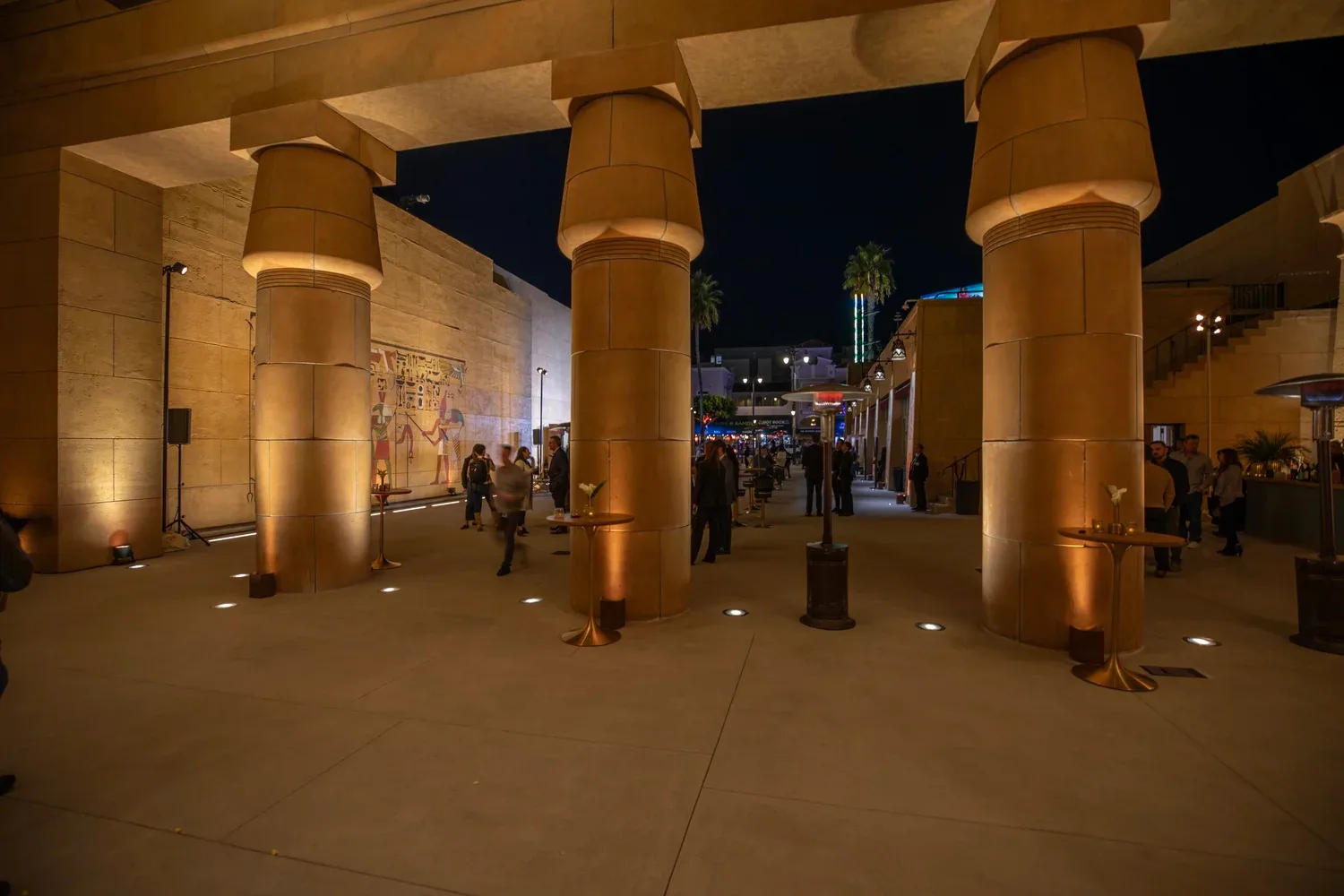 The restored Egyptian Theatre courtyard at night. Photo source: Studio 440. |
The Building Nearly Lost Its Own EndingLike a lot of Hollywood landmarks, the Egyptian's story was not a straight line from opening night to preservation.
The 1994 Northridge earthquake badly damaged the theatre, and the building fell into serious disrepair.
In 1996, the City of Los Angeles transferred the theatre to the nonprofit American Cinematheque with an agreement that the organization would raise the money needed to restore it and return it to public film programming.
The Cinematheque reopened the Egyptian in 1998 with Cecil B. DeMille's The Ten Commandments.
That's a pretty Hollywood comeback: a damaged movie palace returning with one of cinema's biggest spectacles.
Another Restoration, Another ChapterIn 2020, Netflix acquired the Egyptian from the American Cinematheque.
The theatre then underwent another major renovation from 2021 through 2023, with the goal of bringing back much of its original 1922 character while updating the building for modern film presentation.
It officially reopened in November 2023.
Today the arrangement is unusual but fitting: Netflix programs the theatre during part of the week, while the American Cinematheque continues public programming on weekends.
If you want to see what is actually playing there now, the official Egyptian Theatre page points you to current American Cinematheque programming.
A century-old movie palace is still showing movies.
That sounds simple.
In Hollywood, it is not.
|
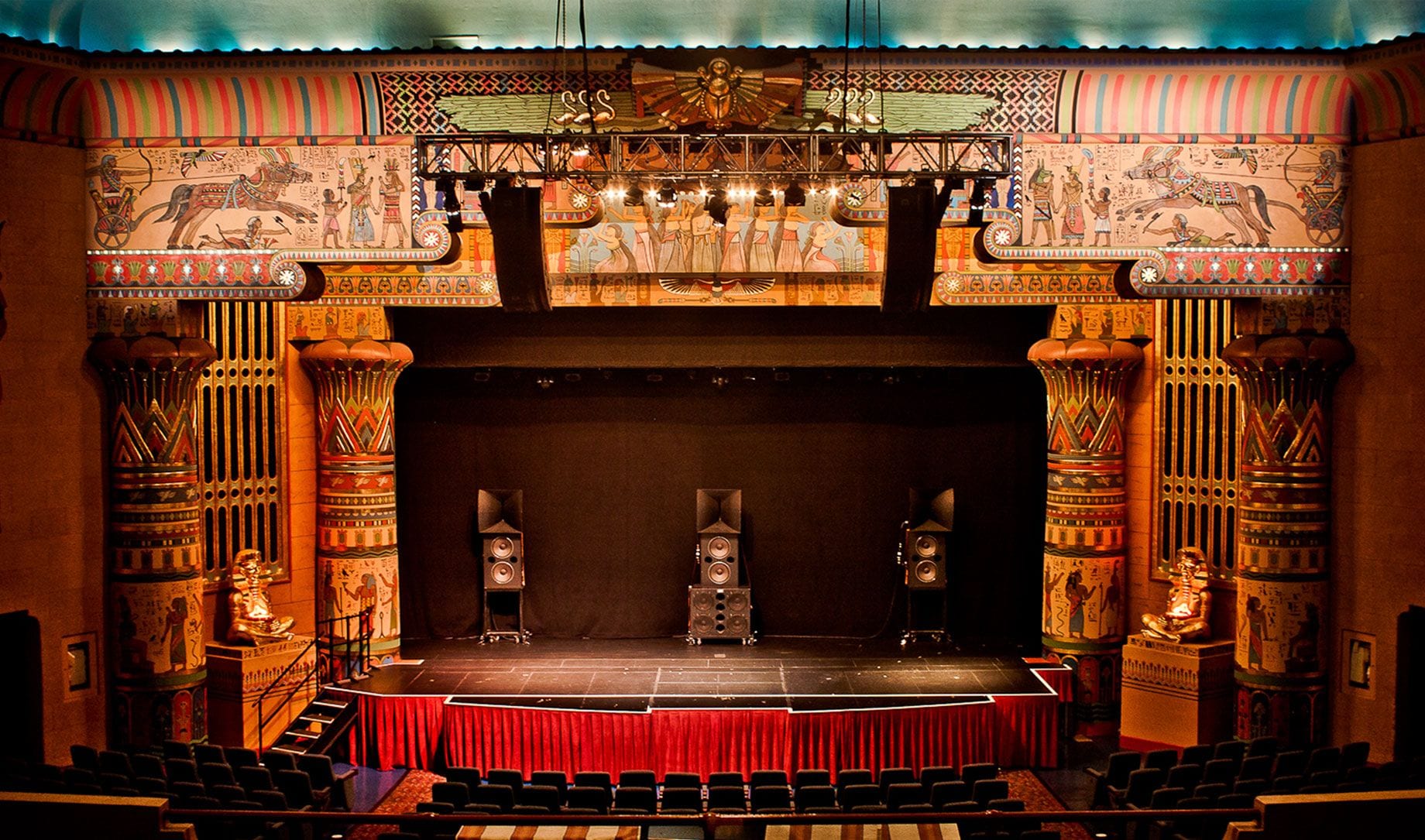 Inside the restored Egyptian Theatre auditorium. Photo source: El Periódico. |
Look Up InsideOnce you're in the auditorium, don't just look at the screen.
Look up.
The restored decorative ceiling and Egyptian-inspired details give the room the kind of visual drama that modern multiplexes rarely attempt.
That's part of what makes a historic theatre different.
The building is not merely holding the movie.
It is participating in the night.
Hollywood Keeps Reusing Its Own HistoryWhat I like about the Egyptian is that its story keeps repeating in slightly different ways.
Hollywood built a spectacular theatre because movies were becoming a cultural force.
The building helped turn premieres into events.
Earthquake damage nearly silenced it.
A nonprofit restored it.
Then a modern streaming company invested in restoring it again.
And now audiences walk through a 1922 courtyard to watch films presented with twenty-first-century technology.
Old Hollywood and new Hollywood are not always enemies.
Sometimes they share the same screen.
Next time you're walking Hollywood Boulevard, look past the marquee for a moment and imagine opening night in 1922. If that kind of hidden-in-plain-sight Hollywood is your thing too, subscribe to Hollywood Local Pulse. I’ll meet you at the next story.
— Ms. V
|
0 Comments
Join the conversation
Be the first to comment
Share your thoughts above.