Hollywood Reservoir: The Quiet Lake Beneath the Hollywood Sign |
Just beyond some of Hollywood’s busiest streets, a working water reservoir creates one of the neighborhood’s calmest landscapes. |
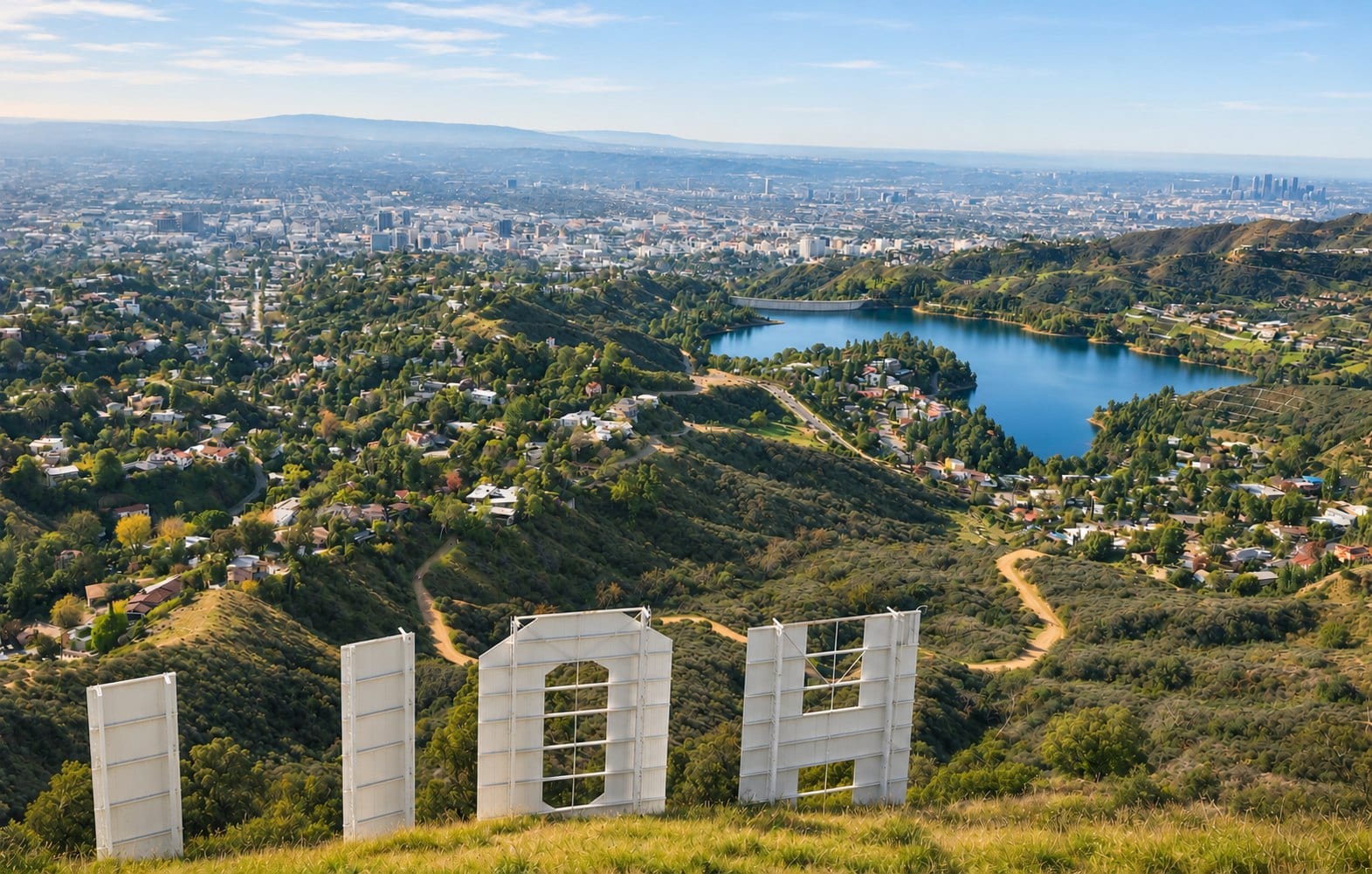
Hollywood is not usually associated with quiet water. Yet tucked into the hills below the Hollywood Sign is a reservoir that can feel strangely removed from the traffic, theaters and apartment buildings only a short distance away. Hollywood Reservoir—often called Lake Hollywood—is both a piece of city infrastructure and one of the neighborhood’s most peaceful walking landscapes. A Lake That Was Built for the CityIs Hollywood Reservoir a Natural Lake?No. The reservoir was created as part of Los Angeles’ water system and is held by Mulholland Dam. That makes the setting more interesting, not less. The water looks like a natural feature from many viewpoints, but its presence is the result of engineering and the city’s long effort to build reliable water storage for a rapidly growing population. Mulholland Dam and a Growing Los AngelesMulholland Dam was completed in the 1920s, during a period when Los Angeles was expanding quickly and investing heavily in water infrastructure. Its name connects the site to William Mulholland, the influential engineer whose career became inseparable from the history of Los Angeles water. Why Was Hollywood Reservoir Built?The reservoir was designed to store water as part of the municipal system serving the city. Today, visitors may focus on the scenery, but the site still carries the logic of infrastructure: protected water, controlled access and a dam built for public utility rather than recreation. What Makes Mulholland Dam Historically Important?Mulholland Dam was constructed in 1924 as Los Angeles expanded its water infrastructure. A City of Los Angeles historical study documents the reservoir's development and its connection to the city's growing water network. The dam is a reminder that a tranquil landscape can have a complicated working history: it was built to hold water, not to create a scenic attraction. Its history also connects to broader questions about how Los Angeles engineered its growth and adapted its facilities over time. For today's walker, the dam provides both a physical crossing and a place to appreciate the scale of that undertaking. |
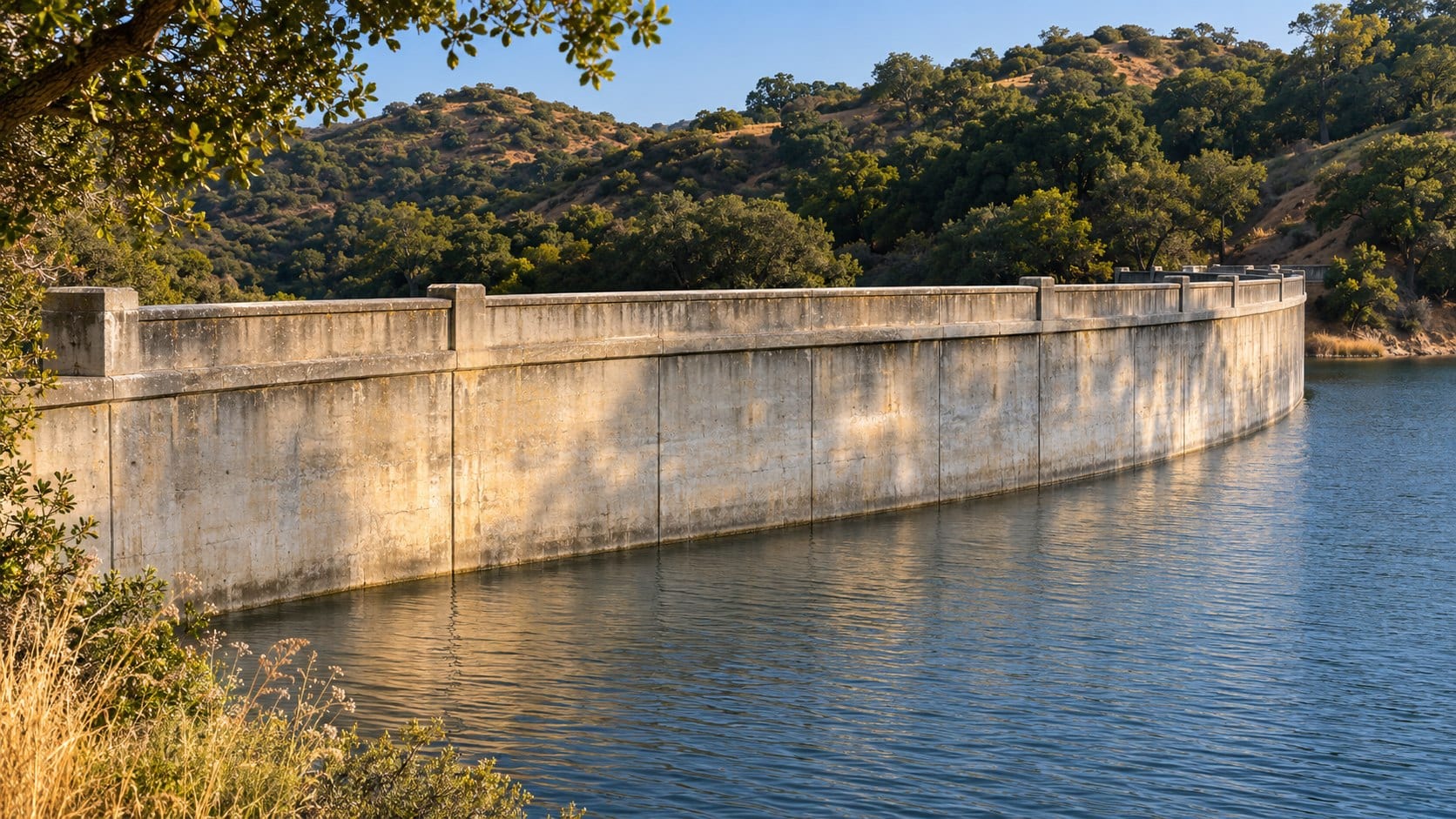 AI-generated editorial illustration inspired by Mulholland Dam at Hollywood Reservoir; not a documentary photograph. |
A Walk Beneath an IconThe route around the reservoir has become popular because it offers something rare in Hollywood: a relatively level walk with water, trees and hillside views. From portions of the route, the Hollywood Sign appears above the landscape in a way that feels completely different from seeing it from Hollywood Boulevard. Here, the sign is not competing with billboards or storefronts. It sits above a working reservoir and a ring of hills. Can You Walk Around Hollywood Reservoir?Public access is available along designated paths and roads around the reservoir, although gates, operating rules and temporary closures can change because the site is managed as water infrastructure. That is why current LADWP guidance should always be checked before a visit rather than relying on an old hiking post. |
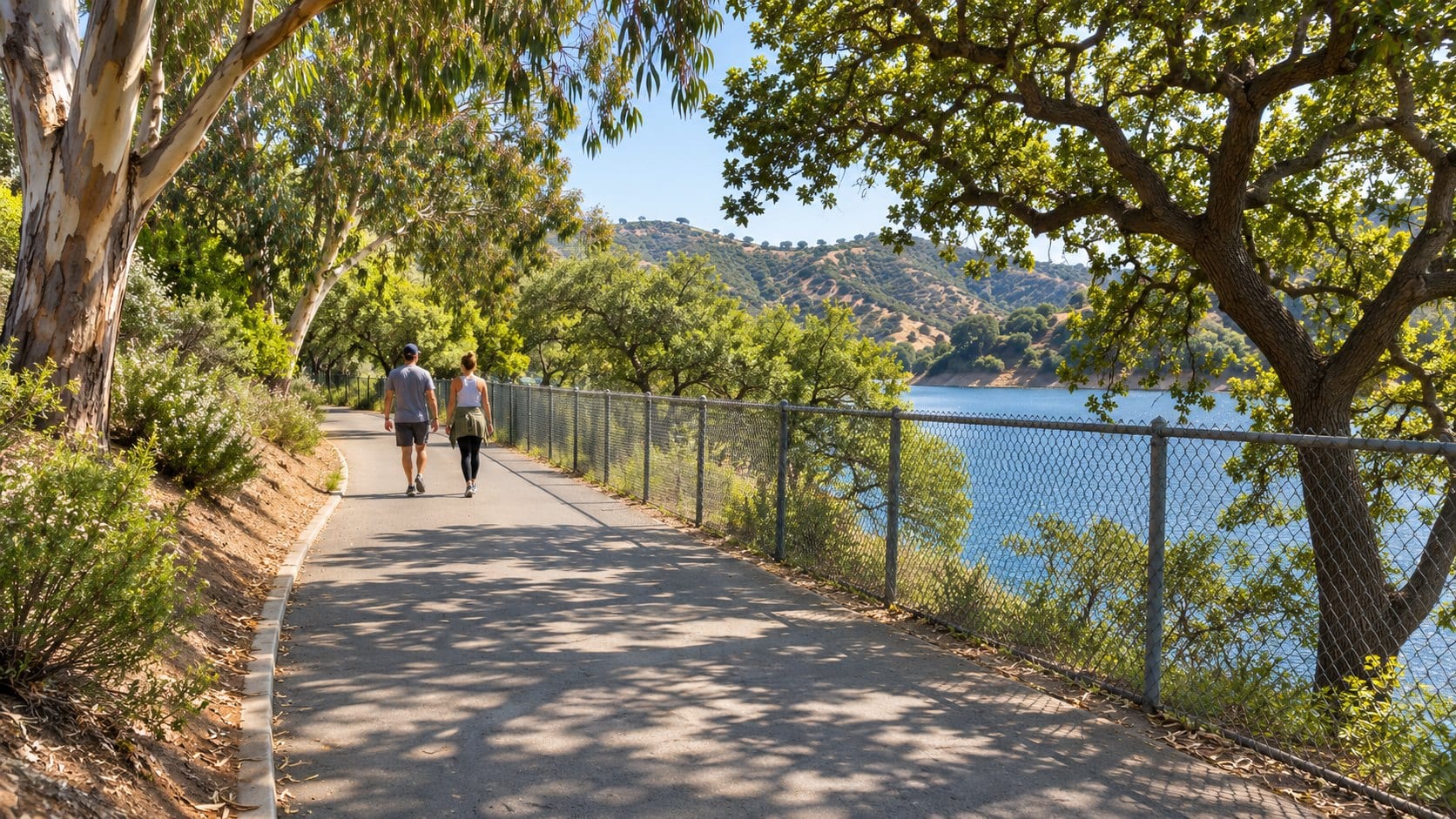 AI-generated editorial illustration inspired by the Hollywood Reservoir walking route; not a documentary photograph. |
How Long Is the Walk Around Hollywood Reservoir?The commonly described loop is approximately 3.3 to 3.4 miles. It is generally a gentle walk, although the route is not entirely a lakeside promenade: sections follow paved service roads or nearby streets, and the full circuit includes a few transitions between paths. Walkers often allow roughly an hour and a half or longer, especially if they stop for photographs. The route is more about unhurried views than a strenuous climb. The experience changes along the way. Trees frame the water in some places, while other stretches reveal the surrounding ridgelines. From the dam, the Hollywood Sign can appear above the reservoir, creating one of the area's most recognizable compositions. |
Where Can Visitors Park for the Reservoir Walk?Visitors commonly approach the walking route from Lake Hollywood Drive near the north gate or from Weidlake Drive near Mulholland Dam. Parking is generally limited to permitted curbside spaces in residential neighborhoods, so signs and restrictions matter more than an old online parking tip. Avoid blocking driveways or narrowing the road for neighbors and emergency vehicles. The entrances are not interchangeable with Lake Hollywood Park, which is a separate destination. Because the route is controlled by the water utility, entrance gates and access conditions may change. Plan a daytime visit, check current posted notices and allow enough time to return before the gates close. Can You See the Hollywood Sign From Hollywood Reservoir?Yes, from certain stretches of the walk and particularly near Mulholland Dam. The view is distinctive because the letters rise above the lake and surrounding hills rather than over the city skyline. The sign is not visible from every bend in the route, and trees, fencing and the shape of the hills affect the sightlines. That makes the changing scenery part of the pleasure of walking around the water. For a different perspective on the surrounding hills, explore HLP's story about wildlife beneath the Hollywood Sign. Are Dogs Allowed at Hollywood Reservoir?Dogs are generally not permitted on the reservoir's controlled walking route, even on leash. That restriction is easy to confuse with rules at nearby parks or trails, which may be different. The Friends of Griffith Park route guide specifically notes the no-pets rule on LADWP reservoir property. Check posted rules before visiting, since the reservoir is managed as protected infrastructure rather than a conventional dog-friendly park. |
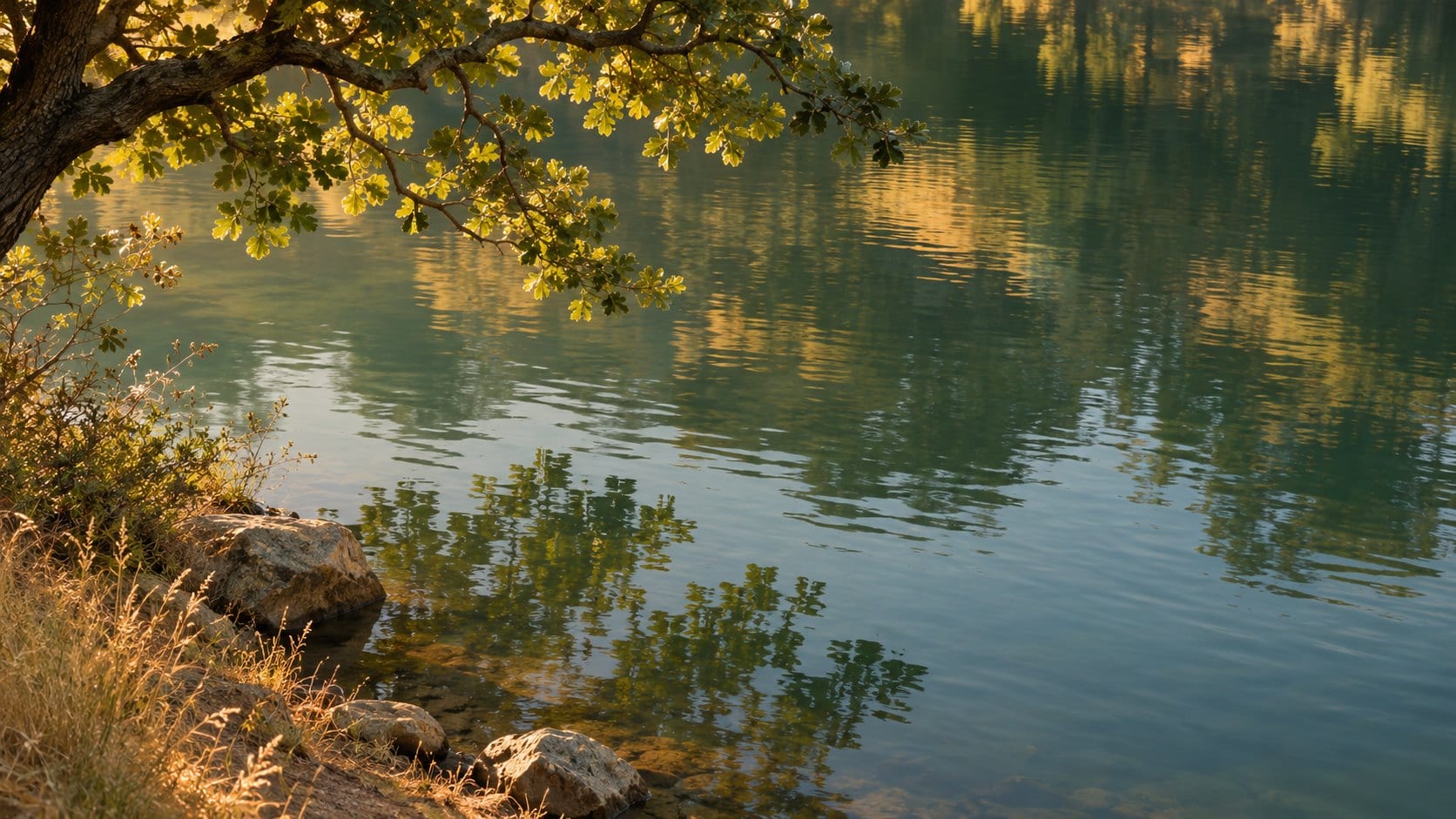 AI-generated editorial illustration inspired by the quiet water and shoreline of Hollywood Reservoir; not a documentary photograph. |
When Infrastructure Becomes SceneryLos Angeles has a habit of turning practical structures into landmarks. Aqueducts, dams, freeways and flood channels are engineering projects first, but over time they become part of the city’s visual identity. Hollywood Reservoir may be one of the gentler examples. Its purpose is serious. Its atmosphere is calm. That contrast is what makes the place memorable. A reservoir built to serve a growing city now gives people a quiet place to understand that city from a little distance. The next time the Hollywood Sign seems like the only thing worth looking at in the hills, look lower. There is a century of water history sitting beneath it. |
0 Comments
Join the conversation
Be the first to comment
Share your thoughts above.