What’s Living Beneath the Hollywood Sign? The Wild Side of Hollywood’s Most Famous Landmark |
Everyone looks at the Hollywood Sign. Far fewer people think about the coyotes, bobcats, snakes, hawks and other wildlife moving through the protected hills beneath those nine famous letters. |
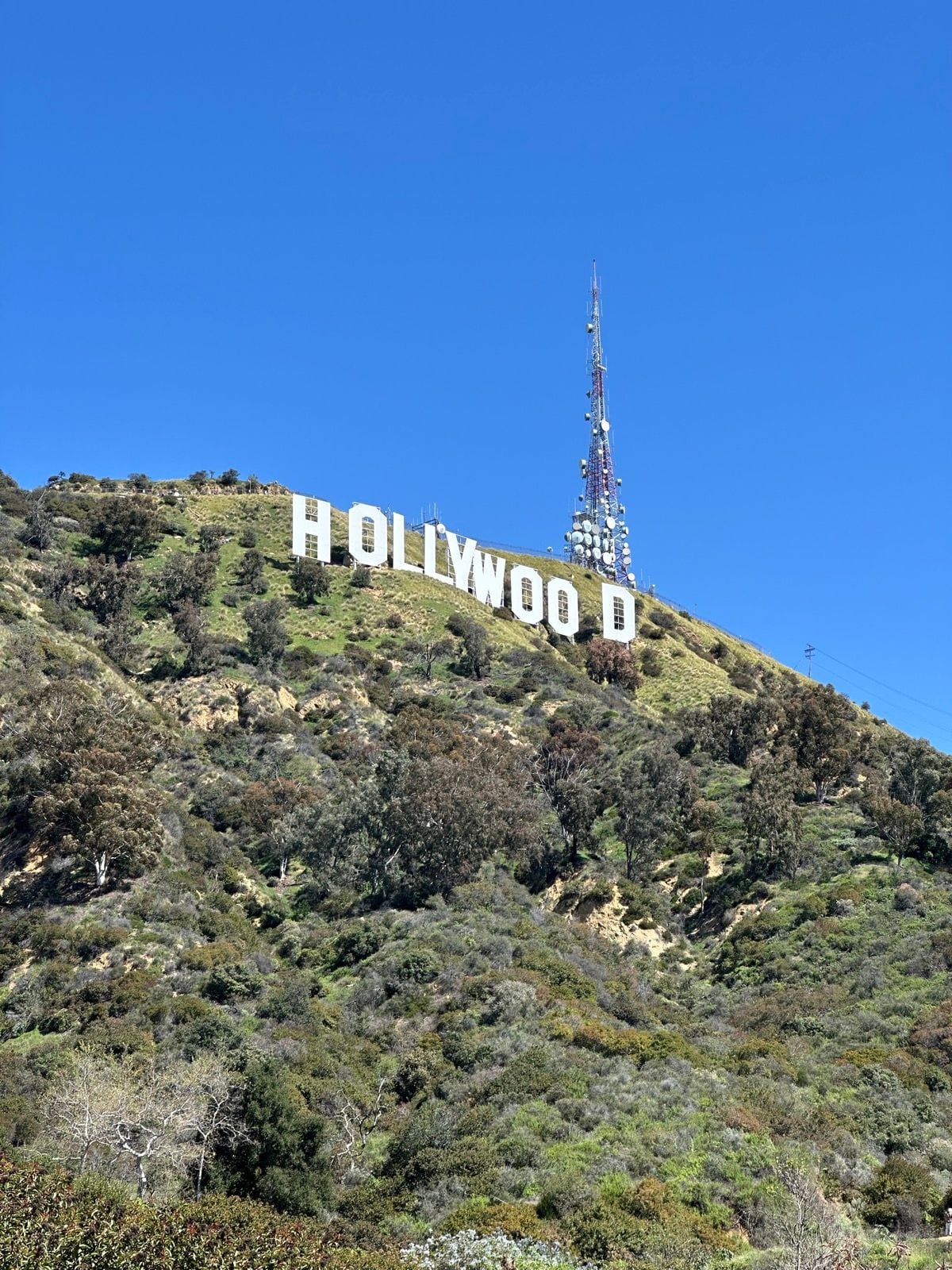
Everyone looks at the Hollywood Sign.
Tourists photograph it. Locals use it to orient themselves. Filmmakers use it as visual shorthand for an entire city.
But here's a question we don't ask very often:
What's looking back from the hillside underneath it?
Because Mount Lee isn't just the pedestal for nine famous white letters.
It sits inside Griffith Park, surrounded by thousands of acres of surprisingly wild terrain—and that terrain has residents of its own.
Hollywood’s Biggest Celebrity Has Wild NeighborsThe Hollywood Sign Trust lists mule deer, coyotes, raccoons, gray foxes, opossums, skunks and bobcats among the animals that live near the Sign.
There are also snakes, hawks and a remarkable variety of smaller wildlife moving through the chaparral and canyons around Mount Lee.
For years, the best-known animal in this landscape was P-22, the mountain lion whose improbable life in Griffith Park turned him into a Los Angeles celebrity in his own right.
The idea of a cougar living within sight of some of the most densely developed neighborhoods in Los Angeles always sounded almost impossible.
That was exactly why people loved him.
He reminded us that Los Angeles has another city layered underneath the freeways, houses and studio lots.
The wild one.
Why the Sign’s Restricted Zone MattersThe Sign itself sits in a restricted area. Visitors cannot simply walk up and touch the letters, and the immediate area is monitored by park rangers and public-safety agencies.
That restriction frustrates the occasional visitor who wants the ultimate selfie.
If you want the legal, sensible way to get a closer look, the Hollywood Sign Trust website has official viewpoints, hiking guidance and preservation information.
But it also means the slopes around the Sign experience less human traffic than you might expect around one of the most photographed landmarks on Earth.
That quieter terrain gives wildlife room to move.
Griffith Park covers more than 4,200 acres, much of it natural terrain. In a city famous for pavement, it functions as a substantial piece of urban wilderness.
|
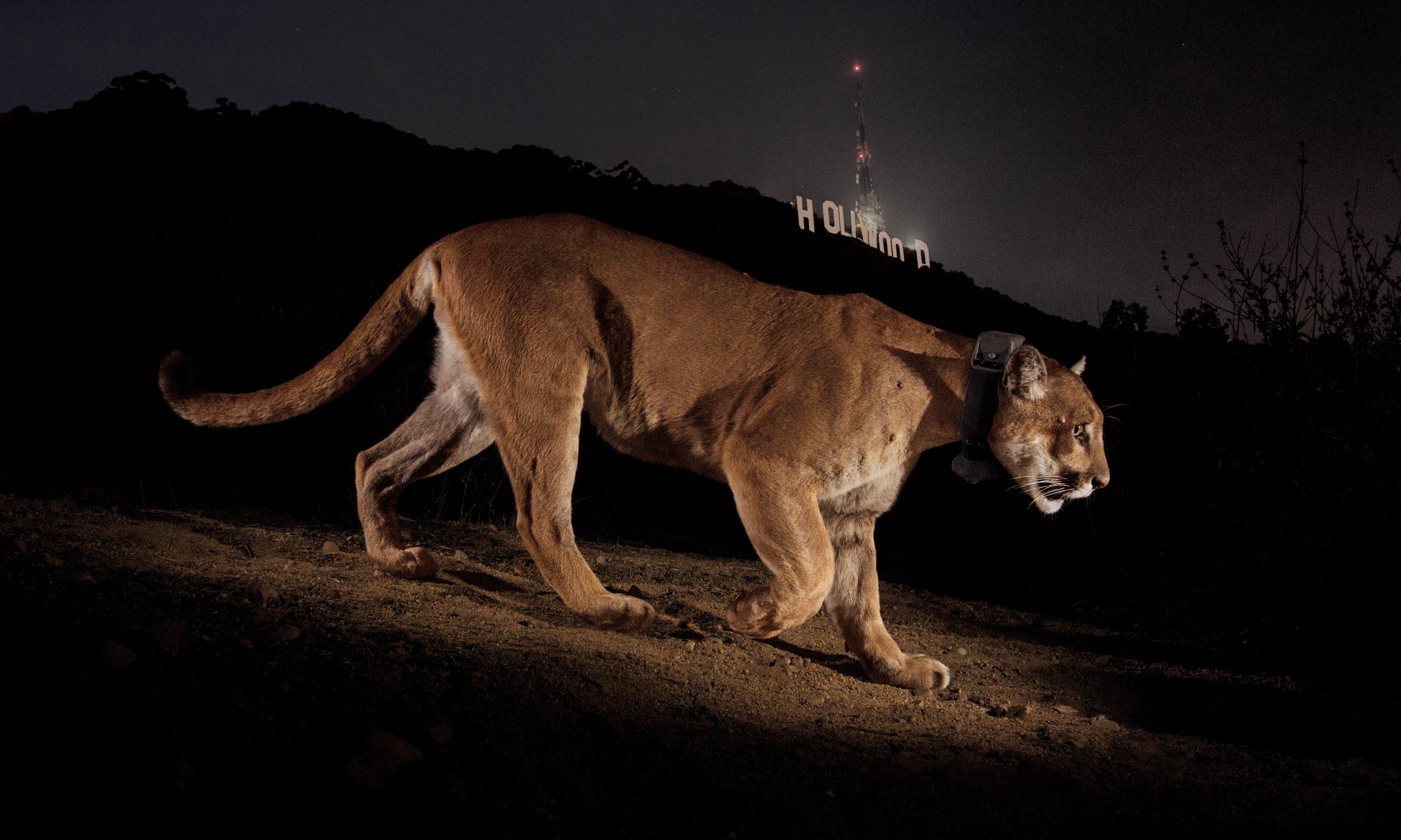 A radio-collared mountain lion photographed in Griffith Park with the Hollywood Sign in the background. Photo source: National Geographic / Steve Winter. |
Before It Was an Icon, It Was an AdvertisementThere is another reason I love this story: even the Sign itself wasn't supposed to become what it became.
In 1923, the original sign read HOLLYWOODLAND. It was built as an enormous billboard advertising a real-estate development in the hills.
Each of the original thirteen letters was roughly 43 feet tall, and the sign was illuminated by thousands of bulbs.
It was intended to last about 18 months.
A century later, people fly across oceans to see it.
Hollywood does enjoy ignoring the original plan.
The last four letters eventually disappeared, the remaining sign fell into decay and the structure was rebuilt in 1978. What began as real-estate advertising became one of the most recognizable landmarks in the world.
And somehow, while the Sign became increasingly famous, the hills beneath it remained wild enough for coyotes and bobcats to keep using them.
The Hills Are Being Watched for More Than TouristsAttention has also turned toward using technology to protect this landscape.
Proposals have described solar-powered, AI-assisted cameras to help monitor conditions around the Sign, including wildfire risk. A proposal is not the same thing as a confirmed installation, so the idea is worth watching rather than treating as a finished project.
That feels strangely appropriate.
One of Hollywood's oldest visual symbols, surrounded by wildlife, with new monitoring technology under discussion.
Only in Los Angeles could a conservation proposal sound a little like a production plan.
|
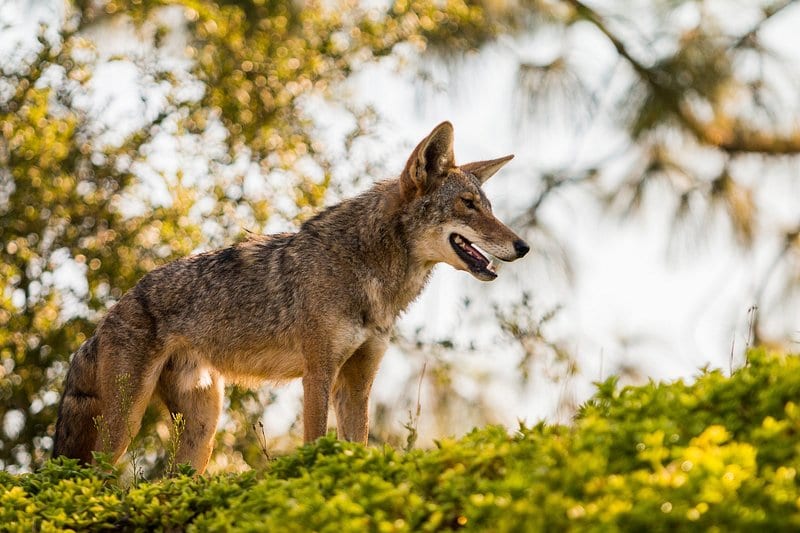 A coyote in Griffith Park—one of the wild neighbors living near the Hollywood Sign. Photo source: Rawpixel. |
Look at the Hill, Not Just the LettersThe next time you see the Hollywood Sign, try something different.
Don't only look at the letters.
Look at the slope underneath them.
Look at the brush.
Look at the canyons cutting through Griffith Park.
Somewhere out there, a coyote may be moving between ridges. A bobcat may be slipping through cover. A hawk may be circling above people taking pictures of a sign that was only supposed to last a year and a half.
The landmark is famous because humans built it.
The landscape is extraordinary because humans never completely conquered it.
Hollywood Has Always Been Wilder Than It LooksWe tend to tell Hollywood history through studios, theaters, restaurants, stars and signs.
Maybe we should occasionally include the animals.
They were here before the movie premieres.
They were here before HOLLYWOODLAND.
And despite everything Los Angeles built around them, some of them are still here.
That's worth looking up for.
If you like discovering the side of Hollywood that doesn't always make the postcard, subscribe to Hollywood Local Pulse. The next story might be hiding in a building—or moving quietly through the brush.
— Ms. V
|
0 Comments
Join the conversation
Be the first to comment
Share your thoughts above.