Hollywood High School: The Neighborhood School Behind the Famous Names |
Beyond the celebrity alumni, Hollywood High’s buildings, mural and preserved school memories tell a fuller story of a working neighborhood institution. |
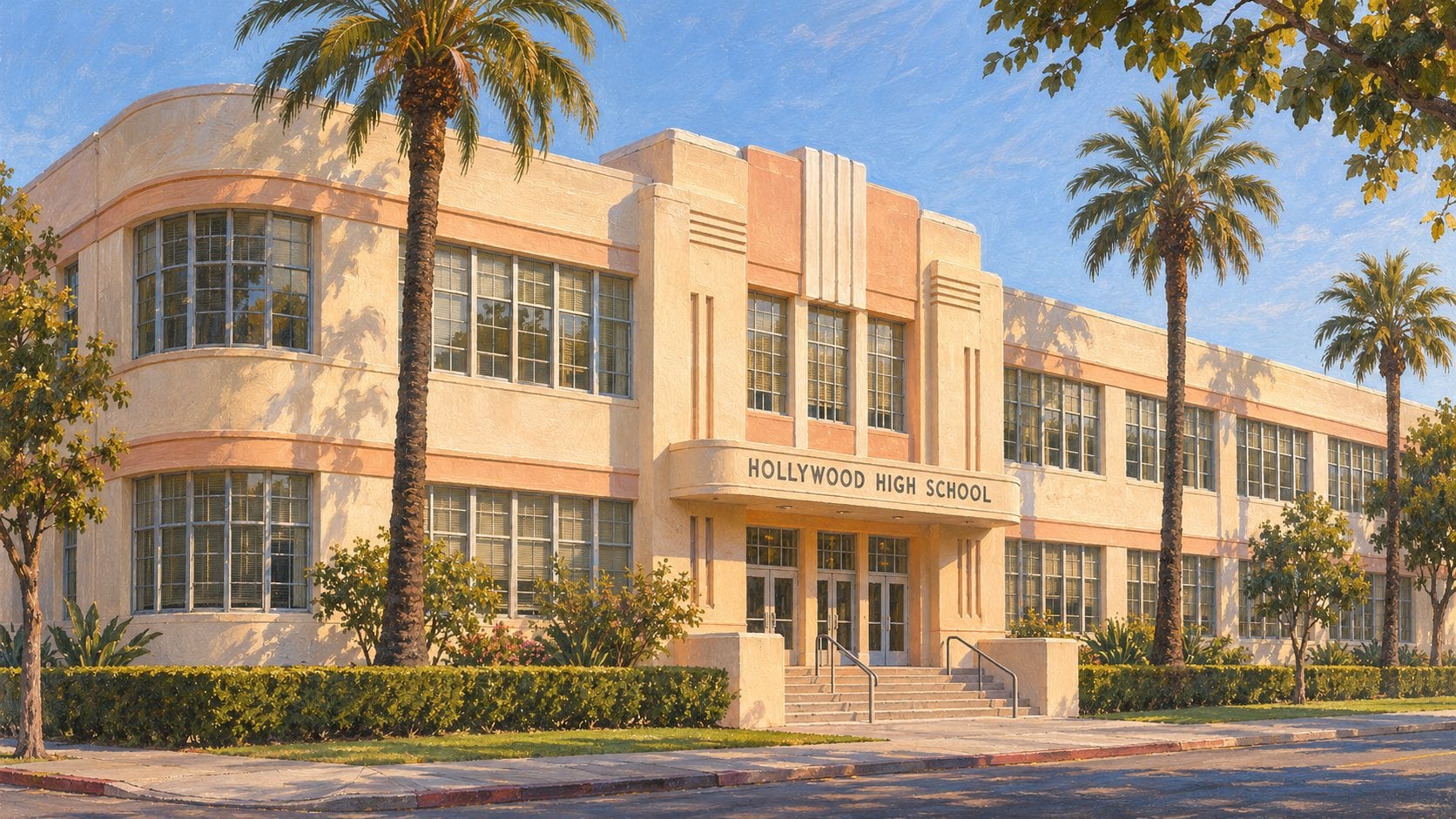 At 1521 North Highland Avenue, Hollywood High School gives passing traffic a wall of recognizable faces. The auditorium mural belongs comfortably in a neighborhood accustomed to looking at entertainers. Behind that public image is a school with a much wider story. Its history runs through Hollywood’s early growth, changing ideas about school architecture, the recovery of nearly forgotten memorabilia and the continuing work of educating students. The famous names are an invitation to look closer. They are not the whole attendance sheet. A School Before Hollywood Became the Familiar HollywoodWhen Was Hollywood High School Founded?Hollywood High began in September 1903. Its earliest classes occupied temporary rooms in a building on Highland Avenue, north of what became Hollywood Boulevard. The school’s beginnings preceded Hollywood’s consolidation with Los Angeles in 1910. The historical marker record provides a concise introduction to those early years and the campus’s later recognition. It helps put the school within a neighborhood still developing the institutions of everyday life. That sequence changes the perspective. Hollywood High did not begin as an attraction attached to an established entertainment destination. It developed as a school serving a community whose identity and industries were still taking shape. The neighborhood would become internationally recognizable, but its residents still needed classrooms and places for young people to learn. School history preserves that practical side of growth, which can disappear behind the more photogenic story of premieres and studios. The Campus Records a Changing CityHollywood High’s architecture carries several periods of its history. The buildings are not simply a decorative setting for a celebrated alumni list; they record decisions about education, rebuilding and how a public institution should meet the street. A city-hosted historic assessment containing the school’s National Register documentation describes the campus’s important PWA Moderne buildings and rebuilding after the 1933 Long Beach earthquake. Architects Marsh, Smith and Powell designed the Science Building, completed in 1935, followed by other classroom buildings later in the decade. Rounded forms, smooth wall surfaces and a strong horizontal character belong to that architectural chapter. 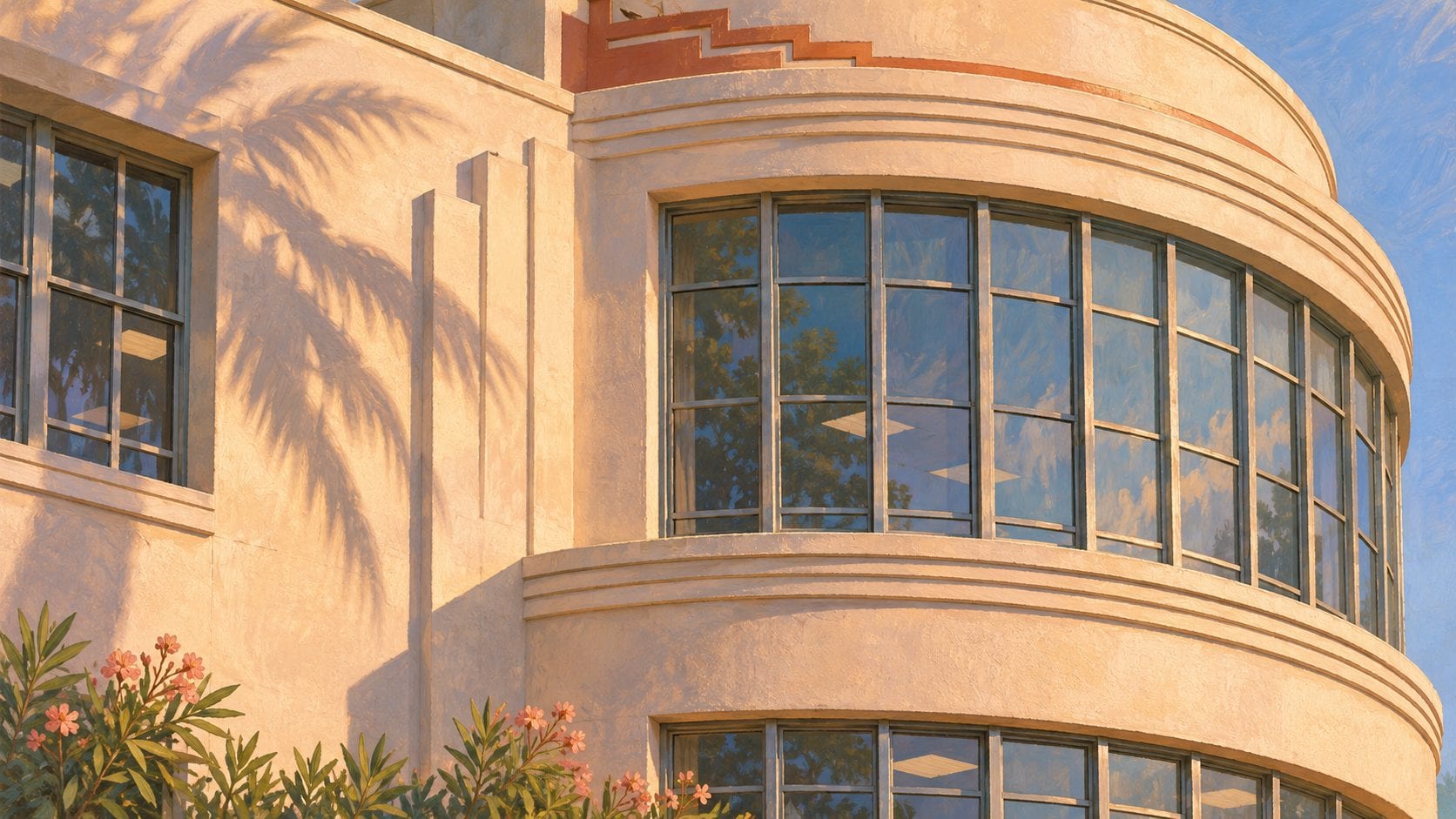 The older library building adds another layer. A campus can contain structures from different moments without losing its identity; the connections between them help show how a school adapted rather than starting over in a single architectural gesture. For a passerby, those differences are worth noticing. A familiar corner becomes more legible when its buildings can be understood as responses to changing needs. The school is part of Hollywood’s built history as well as its educational history. A Mural About More Than a YearbookWhich Famous People Attended Hollywood High School?Judy Garland, Carol Burnett, John Ritter and Carole Lombard are among the names on the school’s list of notable former students. The school groups graduates and attendees together, so inclusion should not be taken to mean that every person completed a diploma there. Their careers offer a recognizable entry into the school’s history. They also span different eras of entertainment, connecting the campus with successive generations of Hollywood. The mural, however, has a different purpose from an alumni register—and its selection of faces needs that distinction. Are All the People in Hollywood High’s Mural Former Students?No. The auditorium mural combines people associated with the school with other figures representing Hollywood’s entertainment history. It should not be read as a painted list of graduates. The alumni association’s account of the mural’s development explains that artist Eloy Torrez sought to celebrate diversity in the entertainment industry. School participation also brought alumni into the selection. That purpose makes the mural more interesting than a celebrity checklist. Its figures connect a neighborhood school with a wider cultural world, while acknowledging that the faces shaping popular entertainment have come from different backgrounds. 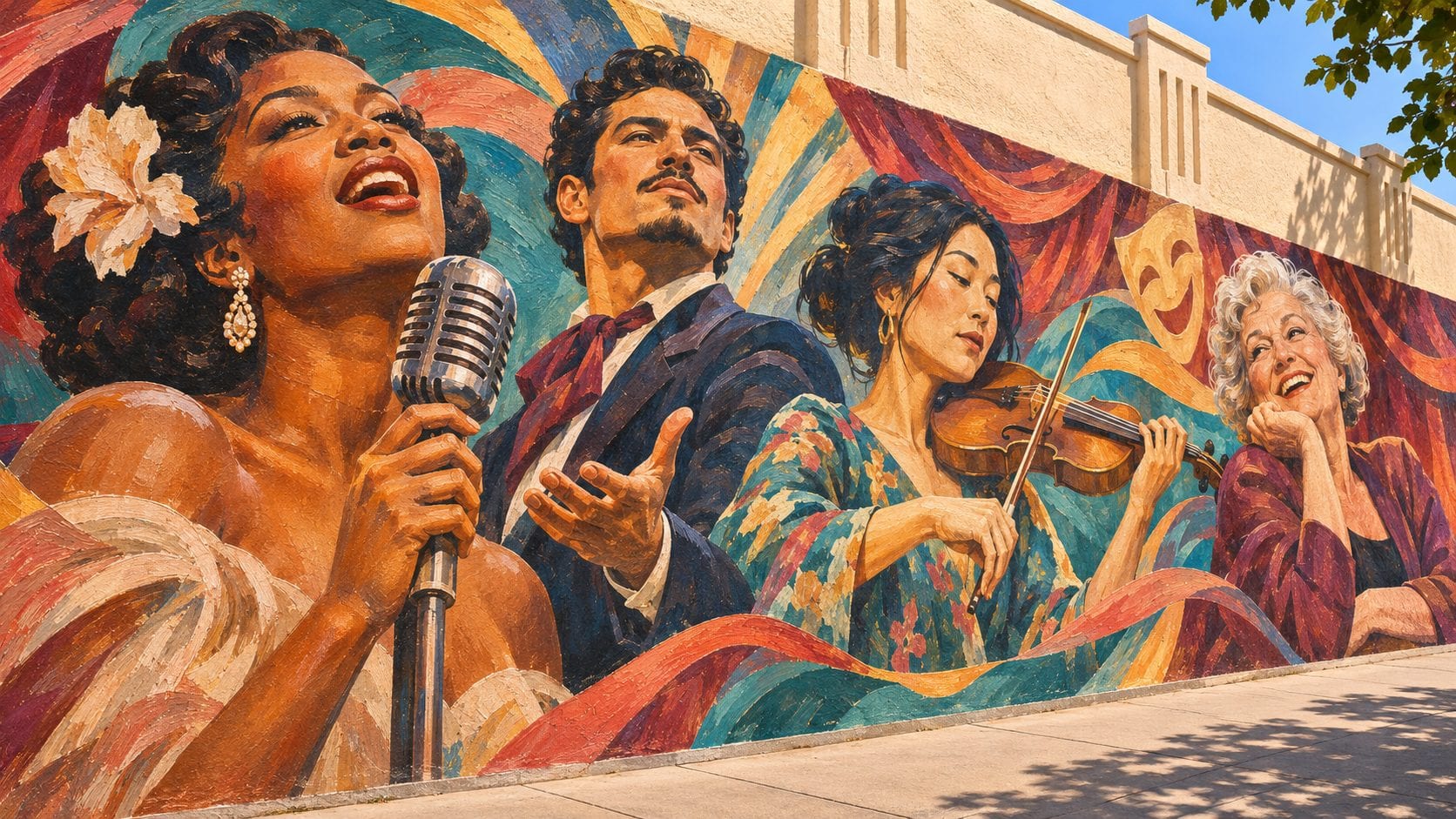 The later John Ritter tribute extended the work onto another portion of the auditorium. His connection to the school belongs to the alumni story, while the mural as a whole has a broader representational purpose. Public art compresses history into something people can recognize in seconds. Taking time to understand the selection restores some of the nuance that a passing glance cannot supply. A familiar face may be the beginning of the inquiry, rather than its conclusion. Watch: A Visual Introduction to Hollywood HighVidstorical Films’ 2025 history feature offers a street-level companion to the school’s story. It is an independent historical overview; the school’s own information remains the place to check current programs and visitor arrangements. The History That Was Waiting in BoxesDoes Hollywood High School Have a Museum?Yes. The alumni association documents a school museum created through an effort that began in 1991. Principal Jeanne Hon encountered stored memorabilia while searching campus spaces for other uses, setting a preservation project in motion. Its history of the Hollywood High School Museum describes the work of Jerry Massey and production designer Hub Braden in developing displays in the 1910 library building. The museum opened in March 1993. The project included restoring interior finishes and finding a public-facing role for objects that had been set aside. The collection also expanded beyond entertainment to recognize former students connected with science, politics, the arts and philanthropy. 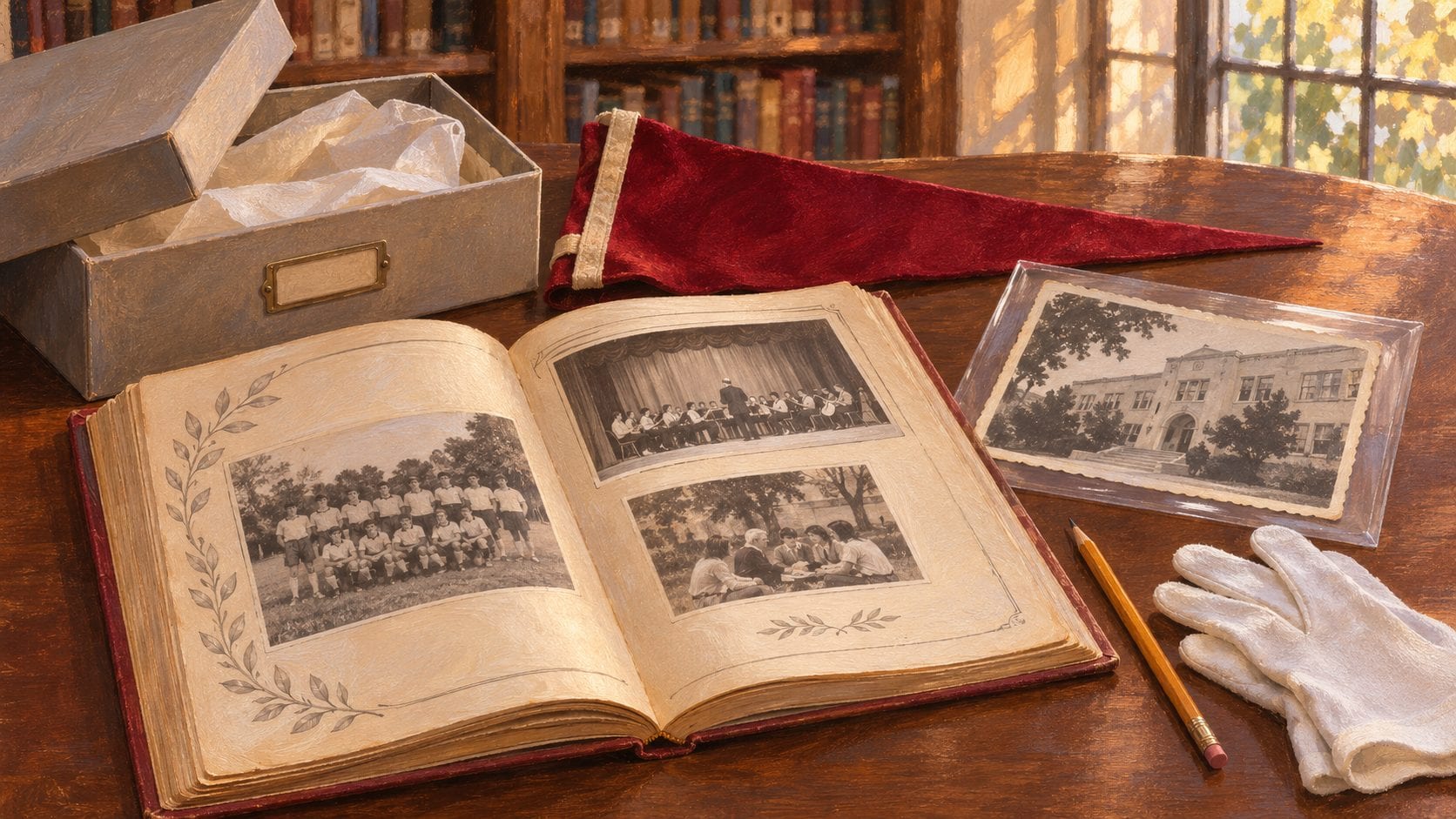 There is something especially useful about that broader approach. A school’s contribution to a city includes many kinds of work, most of which will never produce a recognizable face on a wall. Preserving those records makes room for a less selective memory. Photographs and memorabilia can connect a large institution to individual experience. They give alumni somewhere to locate their own time at school and give later generations a way to understand what preceded them. Ordinary records become valuable precisely because everyday life is so easily discarded. A Working School, With History Around ItHollywood High continues as a public school. Its official website describes educational pathways that include performing arts, new media, teaching and advanced study, alongside its mission of preparing students for further education, work and community participation. That range belongs in the story. The entertainment connection is real, but the institution’s purpose is not limited to supplying another generation of performers. Students arrive with different interests, abilities and plans. HLP’s Pantages Theatre feature explores one of the neighborhood’s prominent performance spaces. Hollywood High offers another perspective on the surrounding cultural landscape: the place where learning comes before the finished performance. Can Visitors Tour Hollywood High School or Its Museum?Do not assume walk-in access. This is an active school campus, and the existence of a museum does not make its classrooms, corridors or collections freely accessible to the public. Ask the school or alumni association about specifically arranged visits and announced public programs. Enjoy publicly visible architecture and artwork from appropriate public areas, without obstructing entrances or disrupting school activity. That boundary is part of seeing the place accurately. Hollywood High is both a landmark with a remarkable past and a school with a present-day responsibility to its students. The names on the famous list may draw attention, but the next class is the reason the institution continues. |
0 Comments
Join the conversation
Be the first to comment
Share your thoughts above.