Hollywood Pantages Theatre: The Movie Palace That Learned to Sing Again |
From 1930 movie premieres to the Oscars and Broadway, a Hollywood landmark keeps finding its next act. |
Hollywood has a talent for reinvention. A building can begin life as a movie palace, spend years hosting glamorous ceremonies, and somehow emerge as the place where an entire audience sings along to a Broadway finale. The Hollywood Pantages Theatre has managed all three. Its best trick may be that it never stopped being a theater people actually use. At 6233 Hollywood Boulevard, just east of Vine Street, the Pantages invites a particular kind of double take. Outside, it belongs to the bustling boulevard. Inside, its Art Deco details recall an era when simply going to the movies was meant to feel like an occasion. The history here is not only about celebrities. It is about how Los Angeles kept finding new reasons to gather in the same room. A Grand Entrance in 1930The Hollywood Pantages opened on June 4, 1930, near the end of Hollywood's great movie-palace boom. Architect B. Marcus Priteca designed it for showman Alexander Pantages, whose vaudeville circuit had helped make live variety entertainment a national pastime. The original plan combined films with stage performances: two different kinds of spectacle under one elaborate roof. Opening night paired the Marion Davies film The Florodora Girl with a live Fanchon and Marco production. Think of it as an evening when the movie ticket came with an extra helping of show business. The theater's own historical timeline documents the opening and the many changes that followed. When Did the Hollywood Pantages Theatre Open?The Hollywood Pantages Theatre opened on June 4, 1930. It was the last movie palace built in Hollywood during the classic movie-palace era and the final theater erected by Alexander Pantages. |
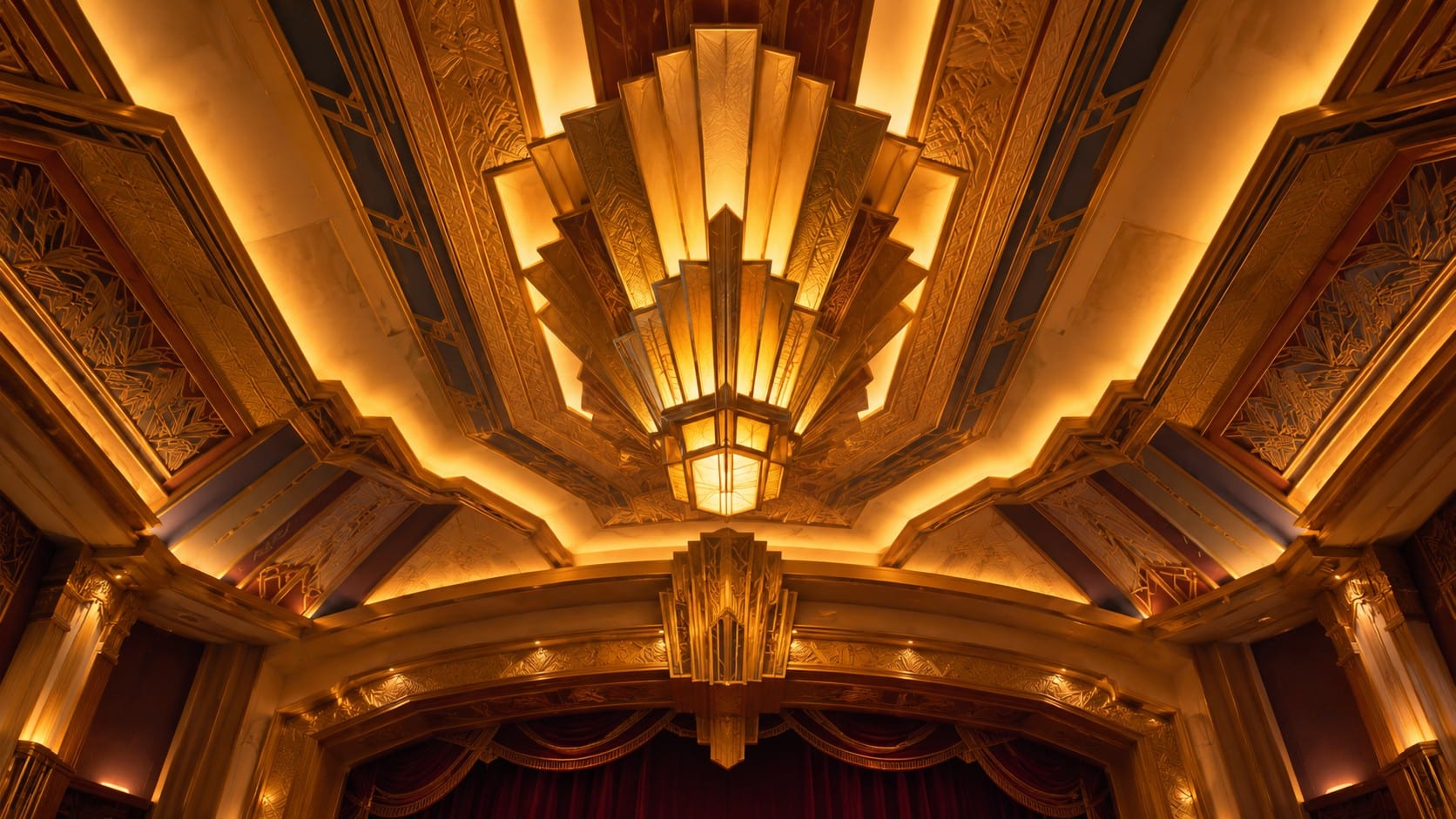
Art Deco, From Sidewalk to StageThe Pantages is not shy architecture. Its original design favored strong geometric patterns, decorative flourishes and the sense that the building itself should join the performance. The Los Angeles Conservancy highlights the chevrons, zigzags, starbursts and theatrical figures that make the landmark a particularly vivid example of Art Deco design. A visitor does not need an architectural vocabulary to appreciate the effect. The details ask you to look up, then look again. It is an antidote to the modern habit of hurrying through a lobby while checking a phone. A Pantages ceiling has a way of making the phone seem less interesting. What Architectural Style Is the Pantages Theatre?The theater is an Art Deco landmark designed by B. Marcus Priteca. Its decorative geometry and dramatic interior were conceived to make the experience of attending a show feel special before the curtain rose. The Oscars Once Had This AddressThe theater's identity shifted with Hollywood's business. During the Depression it became primarily a movie house. In 1949, Howard Hughes acquired the building for RKO, and the Pantages entered another chapter of screen-industry history. From 1950 through 1960, the theater hosted Academy Awards ceremonies. The 1953 Oscars, with Bob Hope among the hosts, were the first televised Academy Awards, linking the auditorium to living rooms across the country. That is a remarkable distinction for a building designed when television was not yet a household habit. The awards eventually moved on. The important part of the Pantages story is that the building did not become a frozen monument to the night the stars came through its doors. It kept changing with its audience. |
Take a closer look inside the real Hollywood Pantages Theatre in Insider’s Peek #7 — Pantages, a short historical tour from the Los Angeles Historic Theatre Foundation. The theater in the video is more than an architectural showpiece. Its changing role in Hollywood tells a story about the audiences who have kept returning, generation after generation. |
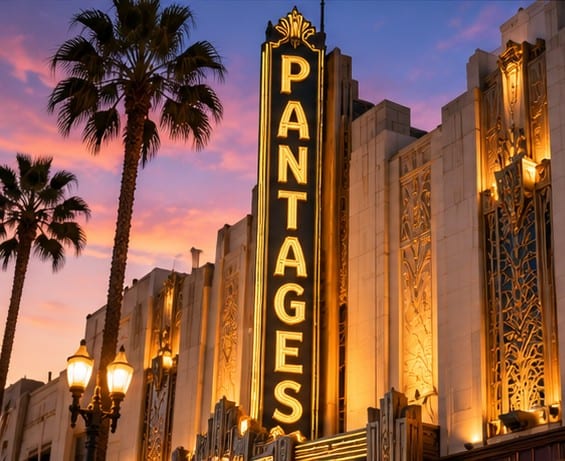 AI-generated illustration of an Art Deco theater marquee at dusk; not a documentary photograph of the Hollywood Pantages Theatre. |
A Movie Palace Finds Its Broadway VoiceThe move toward live theater took shape in the 1970s. In February 1977, the Pantages reopened for stage productions with Bubbling Brown Sugar. Instead of competing only as a grand cinema, the building found a new purpose as a major Los Angeles home for touring theatrical productions. Its next great transformation came around the turn of the millennium. To accommodate a major production of Disney's The Lion King, the venue underwent an extensive restoration. Decorative features that had been obscured or damaged were brought back into view, while modern theatrical systems were added behind the scenes. The renovation was not simply a cosmetic makeover; it was a practical investment in keeping the landmark alive. The architectural firm SPF:architects describes work that balanced historic preservation with contemporary theater needs. That balance is the real success story: the old building was not asked to pretend it was new, and the new performances were not asked to work around every limitation of the past. Is the Hollywood Pantages Still a Working Theater?Yes. The Hollywood Pantages remains an active venue for touring Broadway productions, concerts and other performances. Its programming changes, so the official Broadway in Hollywood website is the appropriate place to check current events. |
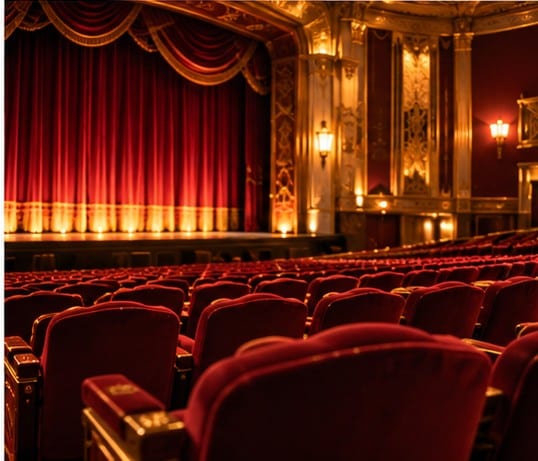 AI-generated illustration of a classic theater auditorium; not the actual Pantages interior. |
Why Its Survival Matters to HollywoodHollywood's most famous buildings are often discussed as backdrops: places for photographs, premieres or nostalgia. The Pantages offers something more durable. People continue to enter it for the same basic reason audiences arrived in 1930—to share an experience that cannot quite be reproduced at home. There is also a neighborhood story here. A working theater brings people onto Hollywood Boulevard, through nearby streets and into restaurants and shops before or after a performance. It keeps an architectural landmark connected to ordinary city life instead of separating it behind a museum rope. |
 AI-generated illustration of vintage theater tickets, not an authentic Pantages ticket. |
A Little Practical Advice Before the CurtainThe theater stands at 6233 Hollywood Boulevard, close to the Hollywood/Vine Metro station. For a first visit, it is worth allowing time to notice the lobby rather than arriving just as the lights dim. Exact entry procedures, accessibility arrangements and performance schedules can change, so consult the official venue information before planning a visit. Where Is the Hollywood Pantages Theatre Located?The Hollywood Pantages Theatre is at 6233 Hollywood Boulevard in Los Angeles, just east of the Hollywood and Vine intersection. It is near the Hollywood/Vine station on the Metro B Line. The Building That Kept Its Seat at the TableIt is tempting to call the Pantages a survivor, but that makes the story sound passive. The theater did more than endure changing fashions. It changed its role, welcomed new audiences and made room for the technology each era required, all while keeping enough of its original character to remind people where they are. Hollywood is full of stories about what used to be. The Pantages is a story about what still happens: the house lights dim, the audience settles in, and an old movie palace gets another opening night. |
0 Comments
Join the conversation
Be the first to comment
Share your thoughts above.