The Hollywood Museum: Where Max Factor Helped Create Hollywood's Famous Faces |
Behind the makeup rooms, mirrors and movie-star magic on Highland Avenue |
Hollywood has always been good at making an entrance. On Highland Avenue, just steps from Hollywood Boulevard, one building helped invent the faces that made those entrances unforgettable. Before it became The Hollywood Museum, the elegant Max Factor Building was a place where the movie business worked out how stars should look—not merely in person, but under powerful studio lights and on a giant screen. There is something wonderfully Hollywood about the address: a former cosmetics headquarters where the rooms had their own hair-color rules, now filled with costumes, props and memories from a century of entertainment. The building is both the setting and part of the collection. To understand why, it helps to begin with the man whose name once stood for a whole new idea of beauty. |
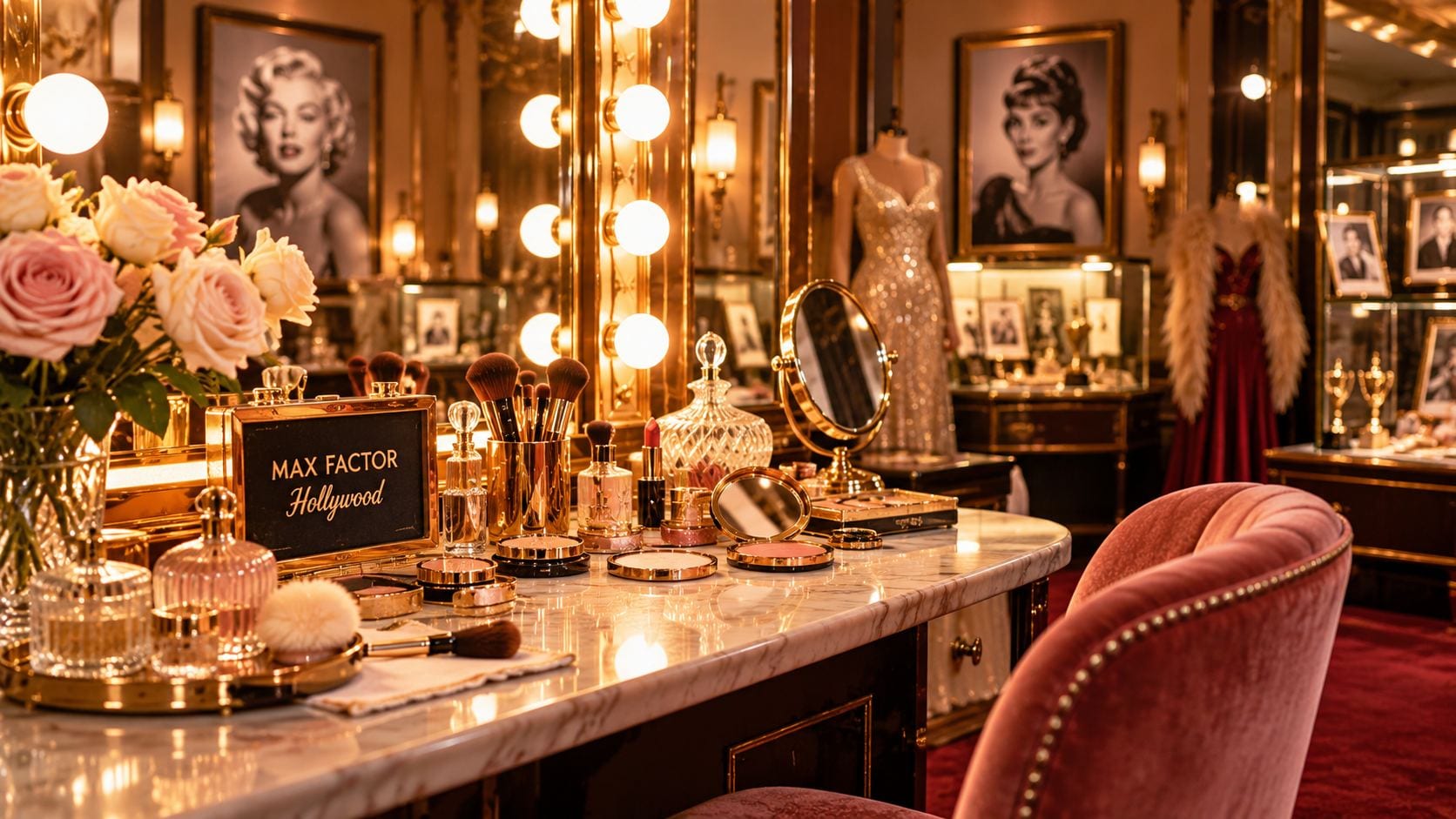 AI-generated conceptual illustration of vintage Hollywood makeup artistry inspired by Max Factor's era; not a photograph of the actual museum or historic makeup room. |
A Makeup Artist Finds His HollywoodMax Factor's story began far from Sunset Boulevard. Born in Poland, he built experience in the beauty trade before immigrating to the United States in 1908. As the movie industry grew in Los Angeles, he recognized a problem that actors, directors and camera operators all shared: makeup designed for the stage did not always behave kindly in front of a film camera. Heavy theatrical products could look unnatural in close-up. Factor developed more flexible screen makeup and refined techniques for matching colors to a performer's complexion. His work grew alongside Hollywood's transformation from silent pictures to increasingly sophisticated movies. The faces on the screen might have seemed effortless, but there was plenty of experimentation behind them. Factor also helped bring the language and products of professional makeup into ordinary life. It was a striking shift. Cosmetics were not simply tools hidden behind studio doors; they became something women could select and use openly. Hollywood's beauty industry was learning to speak to the rest of America. The Building That Made Beauty an EventIn 1928, Factor purchased the Highland Avenue property that would become his celebrated studio. The Great Depression delayed its opening until 1935. Architect S. Charles Lee, known for his theater designs, transformed the building with a glamorous blend of Art Deco and Hollywood Regency elements. The polished exterior was only the beginning. Inside, marble, chandeliers and richly decorated rooms gave a practical business the atmosphere of a premiere. This was not just a place to buy powder. Visitors entered a setting designed to make beauty itself feel theatrical. In Hollywood, apparently, even the dressing room deserved a grand opening. The building's story also says something about the neighborhood. Hollywood Boulevard supplied the marquees and crowds; the nearby studios supplied the films; and here, on Highland Avenue, the public could glimpse the machinery that helped turn performers into screen icons. When Did Max Factor Open His Hollywood Makeup Studio?Max Factor's Hollywood Makeup Studio opened in 1935, after its planned development was delayed during the Depression. The building later became the home of The Hollywood Museum, which opened in 2003 following a lengthy restoration. |
Four Rooms, Four Different LooksThe studio's most memorable feature was a set of four makeup rooms organized around hair color: blondes, redheads, brownettes and brunettes. The labels sound delightfully specific now, but Factor's purpose was practical. His Color Harmony approach considered how hair color, complexion, lighting and makeup worked together. According to the museum, the rooms are preserved as part of the visitor experience. Its blondes room is associated with Jean Harlow and Marilyn Monroe; its redheads room with Lucille Ball and Rita Hayworth; its brownettes room with Judy Garland; and its brunettes room with stars including Joan Crawford and Elizabeth Taylor. These connections help the rooms tell a story about how carefully the Hollywood image was constructed. The categories also reflect beauty ideals of their era. Today, they are best understood as a window into the methods and marketing of a particular time, not as rules anyone needs to follow. Their historical charm comes with a useful reminder: the camera has always influenced the way people think they ought to appear. What Are Max Factor's Famous Makeup Rooms?They are four themed rooms originally used at Max Factor's Highland Avenue studio, each designed around a different hair-color category. The Hollywood Museum preserves and interprets them as part of its history of screen makeup. |
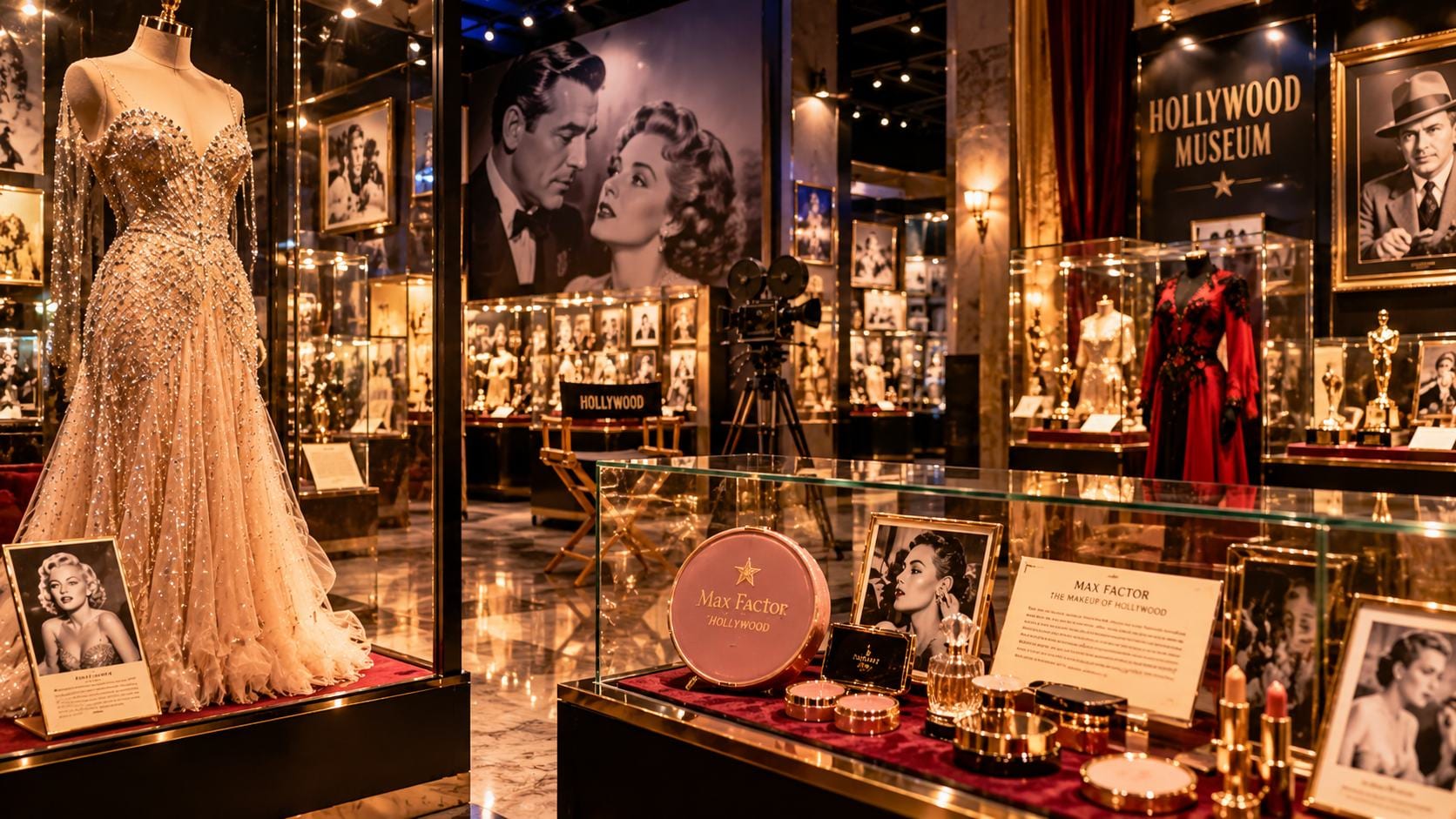 AI-generated conceptual illustration of a Hollywood memorabilia gallery; not a photograph of The Hollywood Museum or its actual collection. |
From Cosmetics Headquarters to Hollywood MuseumThe Max Factor company and its building passed through multiple owners over the decades. The museum recounts that the property was acquired for its preservation in 1994, followed by a restoration that took nine years. When The Hollywood Museum opened in 2003, the old headquarters began a new life devoted to film and television history. The restored lobby, decorative finishes and makeup rooms are essential parts of that experience. But the collection ranges well beyond cosmetics. Across several floors, the museum presents costumes, props, photographs, posters and personal objects associated with performers and productions from different periods. Step inside the Hollywood Museum: PBS’s Everybody with Angela Williamson visits the collection and speaks with museum founder Donelle Dadigan in this 28-minute feature. One turn of the corner may lead a visitor toward a classic star's dressing-room story; another leads into the world of science fiction, television or screen villains. The museum's lower-level exhibits have included horror-film memorabilia, a sharp contrast with the pastel beauty rooms upstairs. Hollywood has always had room for both a flawless close-up and a very convincing monster. What Can You See at The Hollywood Museum?The Hollywood Museum houses exhibits of original movie and television costumes, props, photographs, posters and memorabilia, alongside the restored Max Factor makeup rooms. Specific displays change, so the museum's official website is the best place to confirm what is currently on view. |
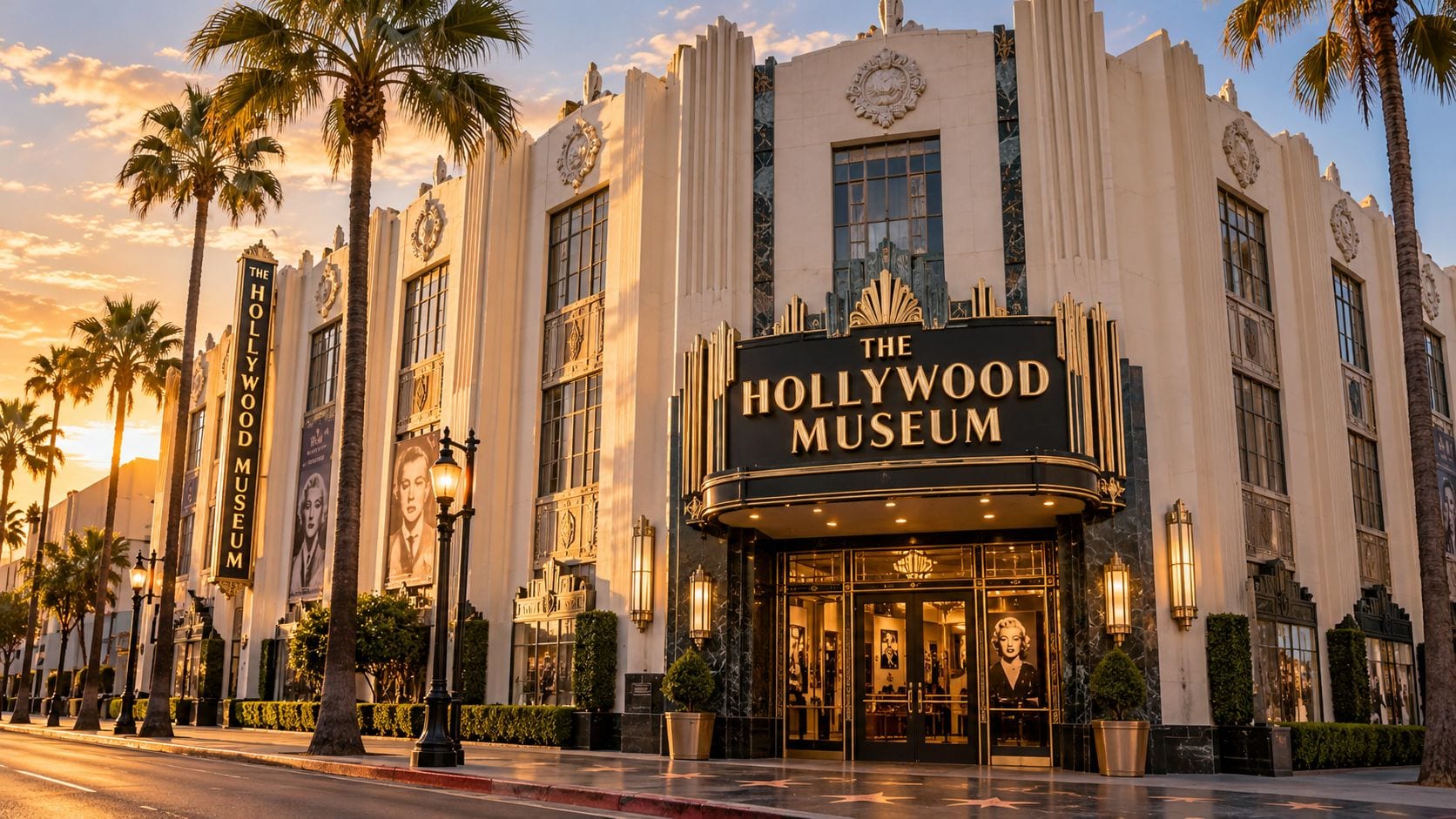
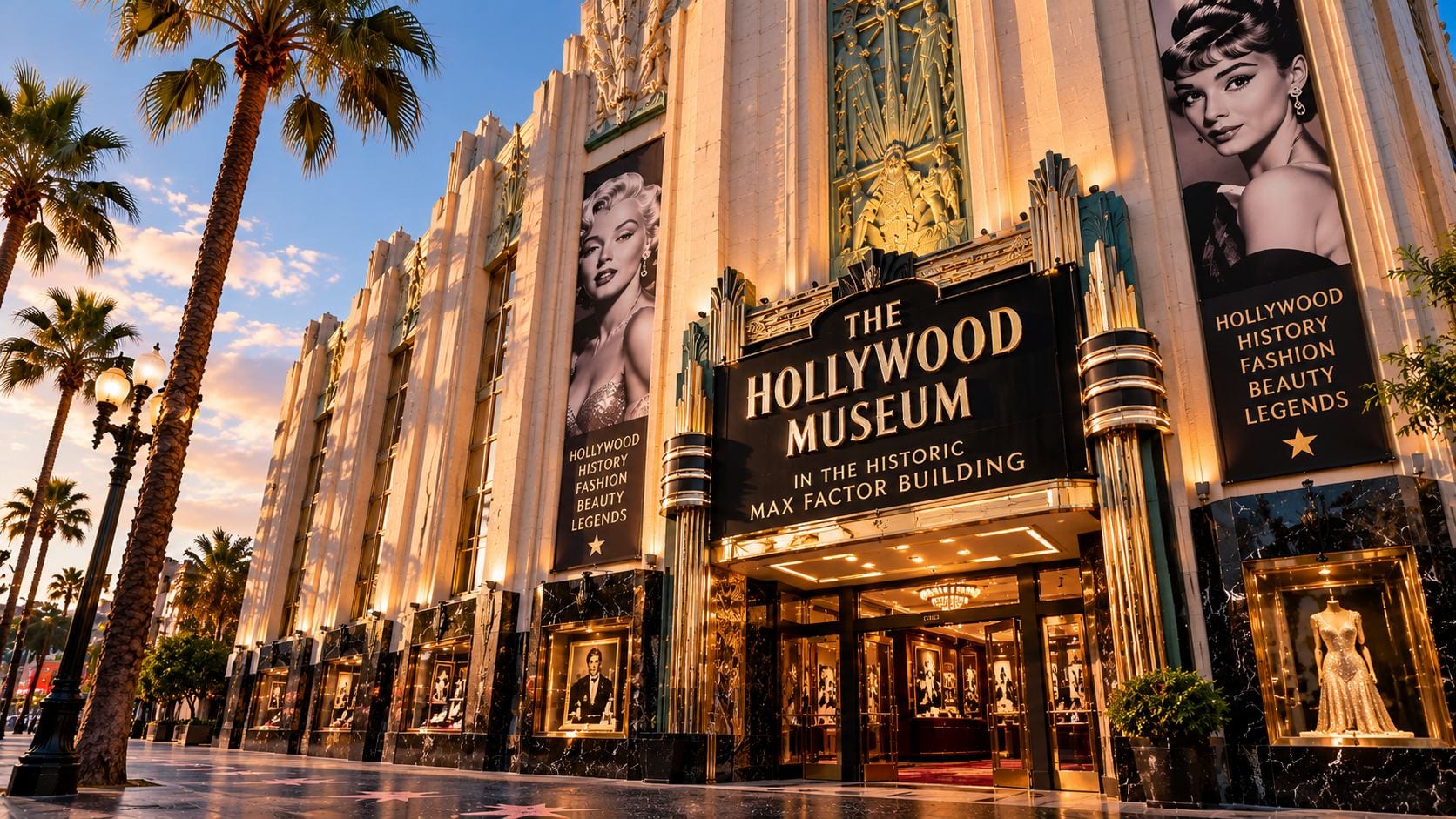 AI-generated conceptual rendering inspired by the historic Max Factor Building's Art Deco details; not a photograph or an exact depiction of the Hollywood Museum facade. |
Why This Corner of Hollywood MattersFilm history is usually told through directors, studios, box-office records and famous performances. The Max Factor Building draws attention to other people and skills: makeup artists, designers, craftspeople and the technicians whose work could change the way a face registered on screen. Their contributions are easy to overlook precisely because, when the work succeeds, an audience sees the character rather than the technique. That is what makes this particular museum different from a room full of celebrity keepsakes. Its own walls witnessed a piece of the process. The restored rooms show a direct connection between Hollywood's dream factory and the real labor required to make a dream look convincing. Where Is The Hollywood Museum Located?The Hollywood Museum is housed in the historic Max Factor Building at 1660 North Highland Avenue, near Hollywood Boulevard in Los Angeles. Its location places it within walking distance of several well-known Hollywood landmarks. Check the museum's official site for current visiting information before making plans. Is the Hollywood Museum Inside the Original Max Factor Building?Yes. The Hollywood Museum occupies the historic Max Factor Building on Highland Avenue, where Max Factor opened his Hollywood Makeup Studio in 1935. The preserved makeup rooms and distinctive architecture help tell the building’s story, alongside the museum’s film and television collections. The next time Highland Avenue feels like a parade of restaurants, traffic and sightseeing buses, it is worth remembering the quiet craft practiced behind this historic facade. Hollywood's stars were made by more than spotlights. Sometimes, the magic began in a room with a mirror. Sources and Further ReadingExplore The Hollywood Museum's building history and its guide to the restored makeup rooms. For an independent architectural overview, see the Hollywood Historic Trust. |
4 Comments
Join the conversation
The costumes and props sound fun, but I’d rather see the old cosmetics rooms. Are any of them still set up that way?
I’ve walked past the Max Factor Building on Highland and never knew its history. Next time I’m nearby, I’m going in.
The part about makeup looking different under studio lights caught me. I never thought about how much work went into that.
Rooms with their own hair-color rules? I’d love to know what they were used for. That’s such a Hollywood detail.