The Barn That Helped Build Hollywood Is Still Standing |
Across from the Hollywood Bowl sits a wooden building with an outsized claim on movie history—and thousands of people pass it without knowing what happened inside. |
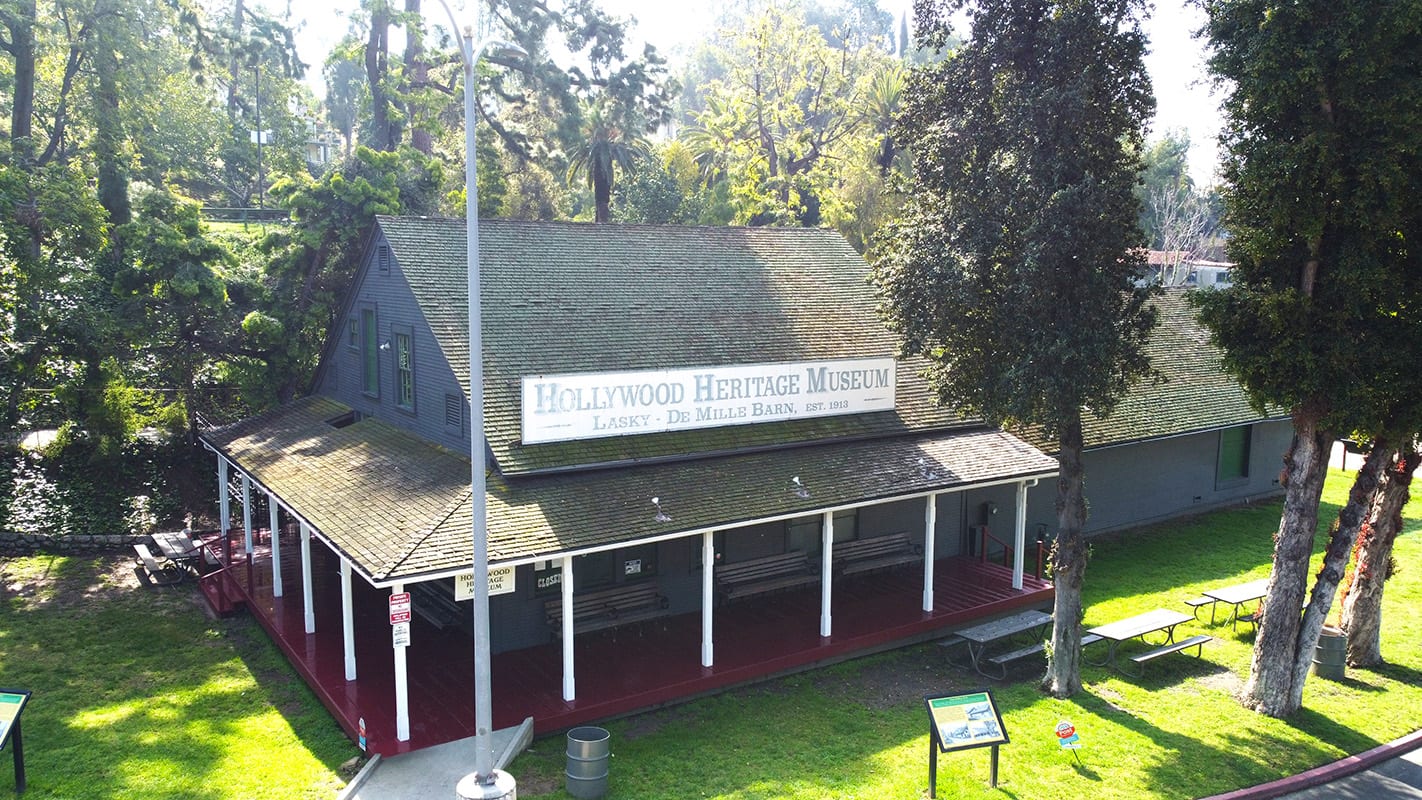
Across from the Hollywood Bowl, surrounded by traffic, tour buses and one of the most famous neighborhoods on Earth, sits a wooden barn.
Not a replica.
Not a movie set.
The real barn.
Long before Hollywood became shorthand for the global movie business, this modest building stood at Selma Avenue and Vine Street. In 1913, Cecil B. DeMille and Jesse L. Lasky rented it as a production facility for the Jesse L. Lasky Feature Play Company.
And from surroundings this humble came one of Hollywood's great origin stories.
DeMille and co-director Oscar Apfel began filming The Squaw Man in December 1913. The feature was released in 1914, and the operation around the barn kept growing.
Hollywood was learning what it could become. |
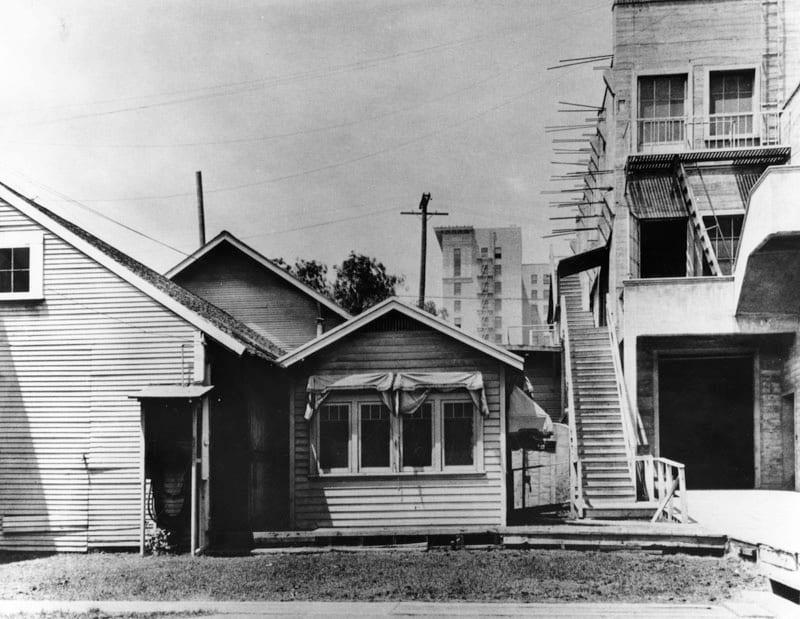 The original Lasky Studio barn at Selma and Vine, photographed in the 1920s. Photo source: Los Angeles Public Library / Wikimedia Commons (public domain). |
Before the Studios, There Was a BarnThe barn had already lived a life before the cameras arrived. Hollywood Heritage dates the structure to 1901; it had served agricultural purposes before Burns and Revier established a film studio there in 1912. The Lasky company took over the following year.
The setup was hardly glamorous. But movies were made, offices operated, and a studio grew around it.
In 1916, Lasky's company merged with Adolph Zukor's Famous Players. The enterprise evolved through further corporate changes into the company we know today as Paramount Pictures.
That is the part I love.
We tend to imagine Hollywood beginning with enormous studio gates, soundstages and movie palaces.
But one of the industry's most important surviving buildings looks like somewhere you'd expect to find hay.
Hollywood Heritage calls the Lasky-DeMille Barn the oldest surviving motion-picture production building in Hollywood. California designated it State Historic Landmark No. 554 in 1956, and it was later listed on the National Register of Historic Places.
The barn also proved unusually good at surviving Hollywood.
When the studio outgrew its original Selma-and-Vine property, the building was moved to Paramount's newer lot in 1926. Decades later it moved again. Hollywood Heritage ultimately took stewardship of it, restored it, and opened the Hollywood Heritage Museum in the barn in 1985.
It's easy to forget how improvised early filmmaking could be. A production company needed somewhere to work, and a barn would do. Nobody could have known what that experiment would grow into.
The barn reminds us that landmarks don't always start out looking important. Sometimes they just happen to have room for a camera.
And after two moves, the building itself has had a longer Hollywood career than many of the people who worked inside it.
Standing across from the Hollywood Bowl today, it offers a rare chance to see that early chapter at something close to human scale.
|
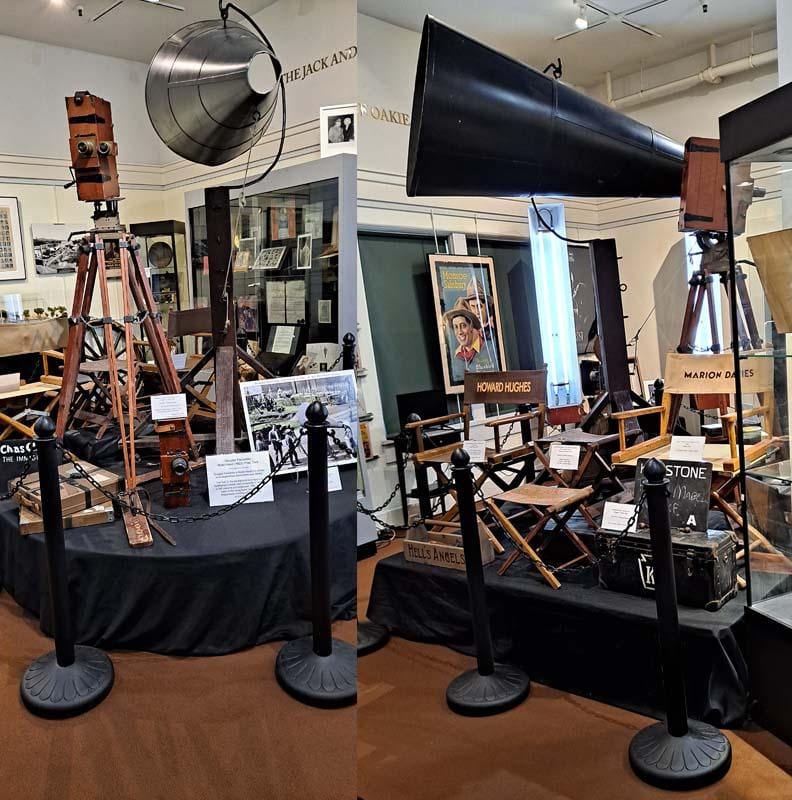 Early-film equipment and memorabilia inside the Hollywood Heritage Museum. Photo source: Hollywood Heritage. |
A Museum Inside the ArtifactThat's what makes the Hollywood Heritage Museum different from most museums.
The building isn't simply holding Hollywood history.
The building is Hollywood history.
Inside are archival photographs, documents, props and memorabilia from early motion pictures and the community that grew around them. Visitors can even step into the structure where DeMille maintained an office.
The Hollywood Heritage Museum periodically closes for preservation work, special projects and other circumstances, so check the museum's official website for current hours and visitor information before making a special trip.
But even from outside, the barn is worth knowing about.
Because Hollywood loves monuments to success. Giant signs. Famous theaters. Studio gates. Stars pressed into sidewalks.
This one is different.
It's small enough to miss.
And maybe that's why it tells the story so well.
Before Hollywood became an industry, it was people trying something new with whatever space they could find.
Sometimes history announces itself with a spotlight.
Sometimes it survives in a barn.
Hollywood has more stories like this hiding in plain sight. I'll keep looking for them. If you'd like to come along, subscribe to Hollywood Local Pulse and I'll see you in the next one.
— Ms. V |
0 Comments
Join the conversation
Be the first to comment
Share your thoughts above.