Hollywood Walk of Fame: The Sidewalk That Became a Legend |
How an ambitious neighborhood improvement project grew into Hollywood's famous stars |
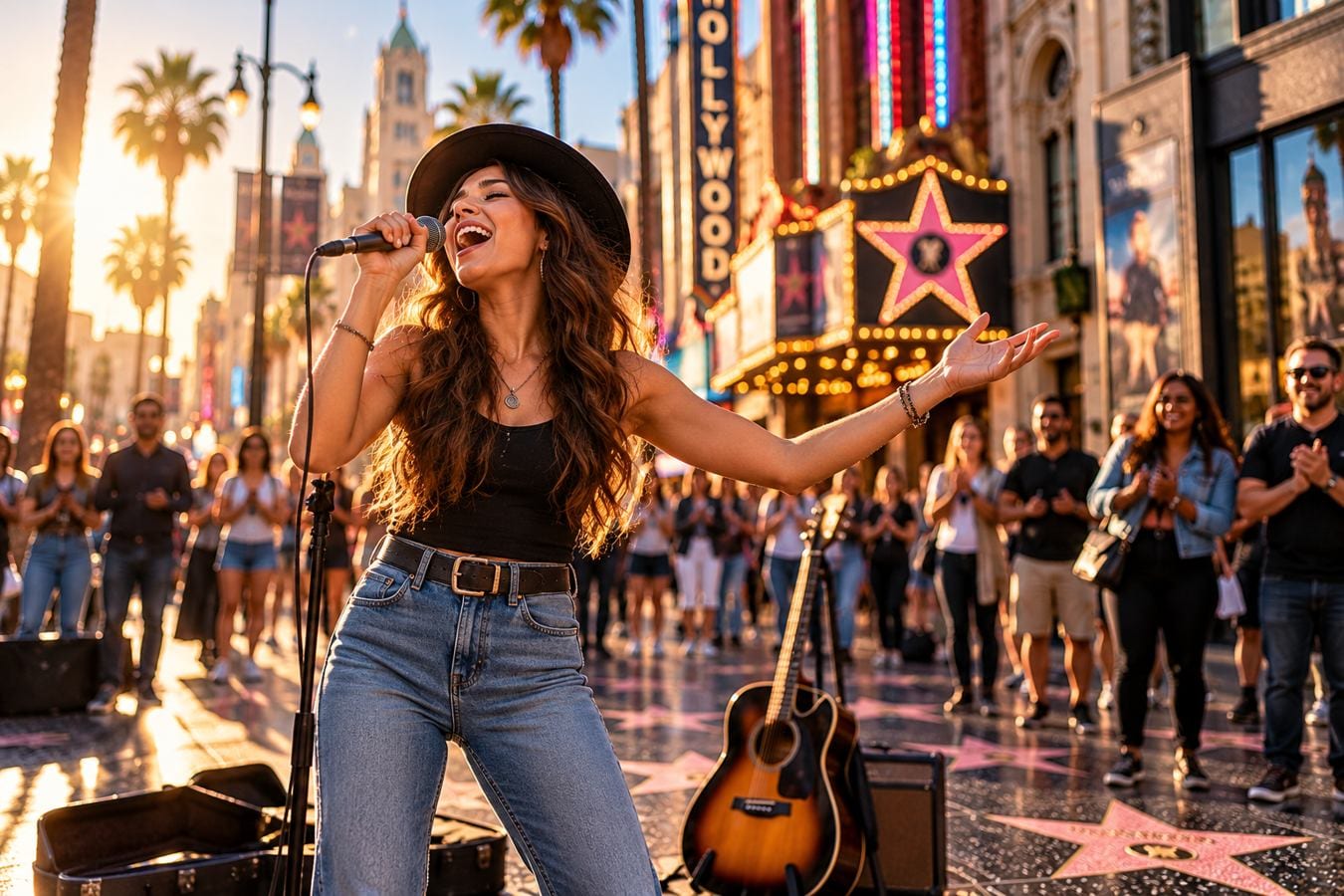
The most photographed sidewalk in Hollywood began as a neighborhood improvement idea. Long before visitors started crouching beside their favorite names, local business leaders were trying to give Hollywood Boulevard a reason to sparkle again. Today the Hollywood Walk of Fame feels inevitable, as if the stars simply arrived with the movies. They did not. It took committees, property owners, city approvals, construction crews and years of persistence to turn a marketing idea into one of Los Angeles's most recognizable public places. The idea that began in 1953The Hollywood Chamber of Commerce credits its 1953 president, E. M. Stuart, with proposing a sidewalk tribute that would celebrate the entertainment industry and strengthen Hollywood's identity. The original inspiration is uncertain. One possible predecessor was the old Hollywood Hotel, whose dining-room ceiling reportedly displayed painted stars bearing celebrity names. Early designers even considered putting caricatures of honorees inside the sidewalk stars. That would have given pedestrians a rather different collection of faces to step around. The proposal eventually gave way to the familiar star-shaped design and the black-and-coral sidewalk palette. City approval and funding required more than a clever drawing. The plan involved an assessment district, with neighboring property owners helping pay for improvements such as paving, lighting and street trees. Four selection committees initially represented motion pictures, television, recording and radio. |
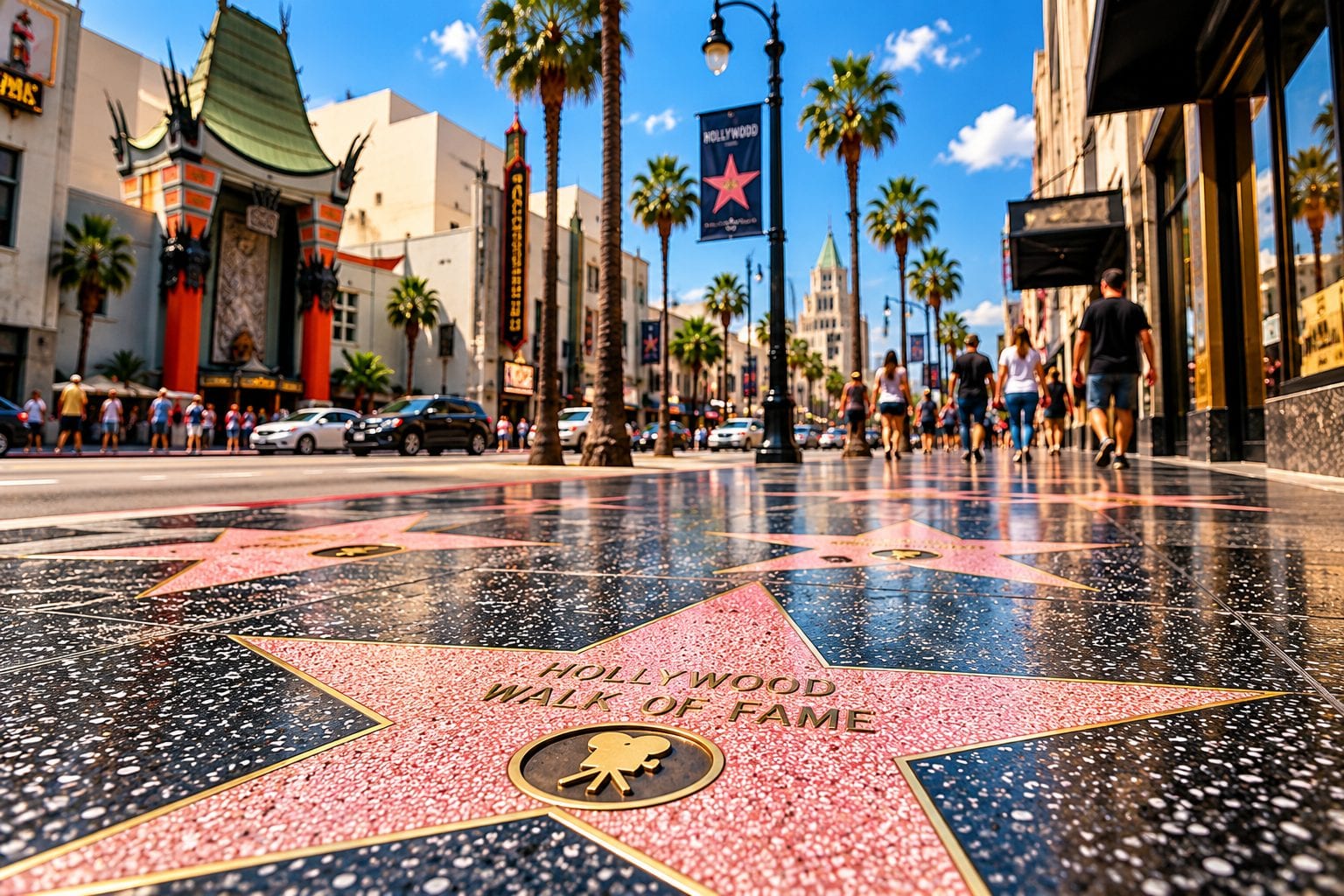 AI-generated editorial illustration inspired by the Hollywood Walk of Fame and nearby theater district; the star lettering and street scene are imaginative, not a photograph of an actual star or location. |
Eight stars before the Walk officially beganOn August 15, 1958, eight demonstration stars were unveiled near Hollywood Boulevard and Highland Avenue. They were a preview, intended to show the public what the completed attraction might look like. Joanne Woodward was among those eight honorees, alongside performers including Burt Lancaster and Ronald Colman. That demonstration explains a stubborn Hollywood trivia dispute. Woodward is often called the first Walk of Fame honoree, but the distinction depends on what 'first' means. The eight early stars were prototypes, not the beginning of the permanent construction program. |
Who received the first star on the Hollywood Walk of Fame?Joanne Woodward is often described as the first honoree because her name appeared among the eight demonstration stars unveiled in August 1958. But those stars were a preview. Film producer and director Stanley Kramer received the first star installed in the permanent Walk, laid on March 28, 1960, near Hollywood Boulevard and Gower Street. Construction had begun on February 8 that year, after a much longer planning process than the original organizers probably imagined. Hollywood has always loved an opening night. This particular opening took place with construction equipment and concrete instead of a red carpet. |
From construction project to civic landmarkThe Walk was dedicated on November 23, 1960, in connection with the Hollywood Christmas Parade. Work continued afterward, and the completed project was accepted in spring 1961 with 1,558 stars. Those early names were not added through the familiar modern sequence of individual televised ceremonies. New additions required a workable selection and funding system. In 1962, the Los Angeles City Council designated the Hollywood Chamber of Commerce to advise the city about adding honorees. Another star did not arrive until December 1968, when producer Richard D. Zanuck was honored. Over time, individual ceremonies became part of Hollywood's public calendar. In 1978 the Walk received designation as Los Angeles Historic-Cultural Monument No. 194, recognizing the sidewalk itself as a piece of the city's heritage. |
Where is the Hollywood Walk of Fame located?The Walk of Fame follows Hollywood Boulevard from Gower Street to La Brea Avenue and Vine Street from Yucca Street to Sunset Boulevard. Its stars sit on public sidewalks, connecting entertainment landmarks with shops, transit stops, offices and everyday neighborhood life. The attraction is not a single plaza or enclosed museum. It is a working set of city sidewalks, which is part of its charm and occasionally part of its chaos. Look past the crowds and the star names become a kind of informal map. Different eras of film, music, broadcasting and live performance sit beside one another, sometimes only a few steps apart. |
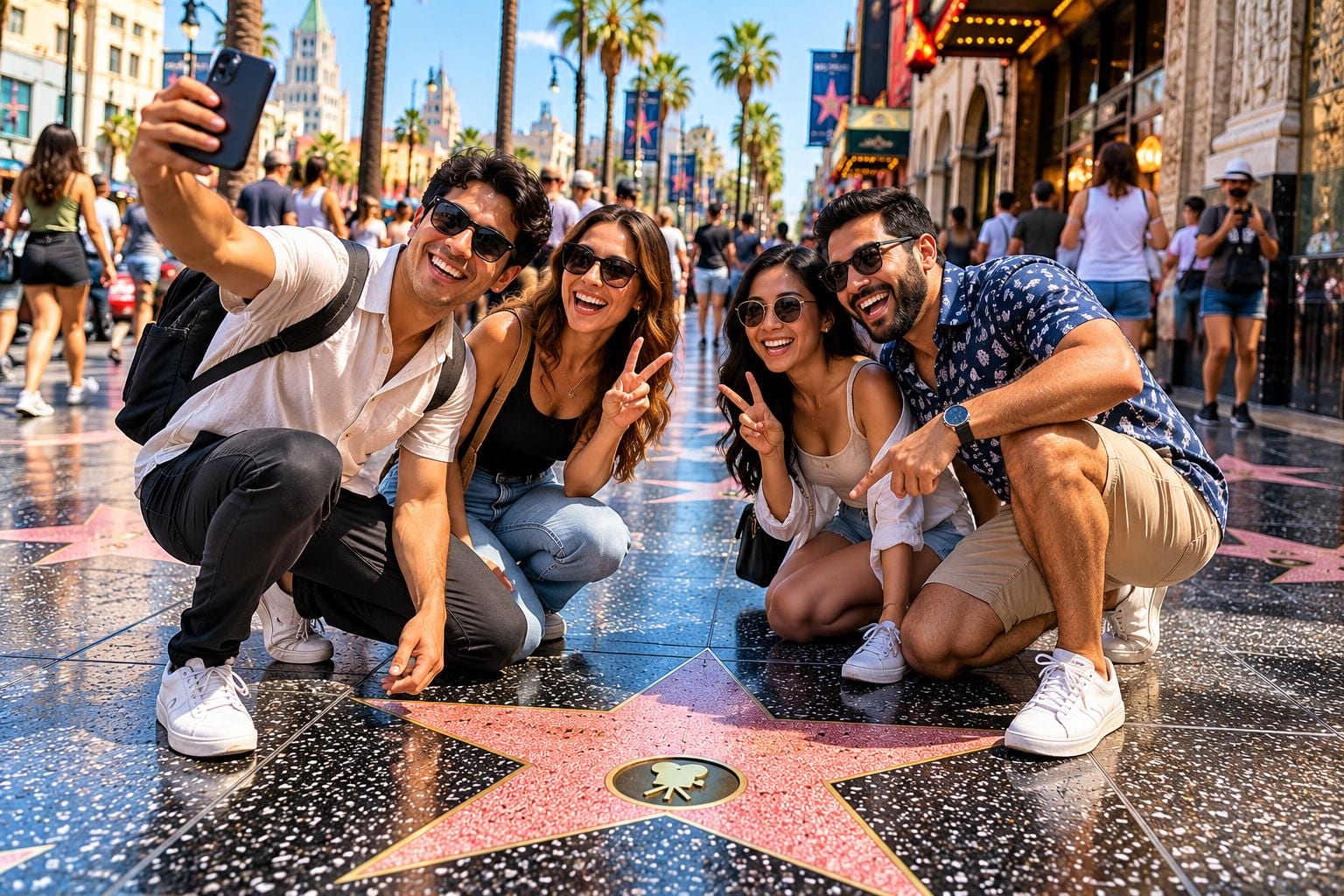 AI-generated editorial illustration of fictional visitors posing for a selfie beside a Hollywood Walk of Fame-style star. Not a photograph of actual people or a specific star. |
How does someone get a star on the Hollywood Walk of Fame?A person or group must be nominated and considered through the Hollywood Chamber of Commerce's formal selection process. Nominees must meet the program's eligibility requirements, and those selected must agree to participate in a dedication ceremony. Selection is not automatic, and an approved nomination does not mean a star appears immediately. The original four entertainment categories later expanded: live theatre was added in 1984. The Walk continues to grow through new dedications rather than remaining a sealed monument to Hollywood's past. That growth also changed the design. As prime sidewalk space became scarce, organizers adopted an alternating second row of stars in some areas. The solution was practical, but it also says something about Hollywood: there is always another name waiting for its moment. |
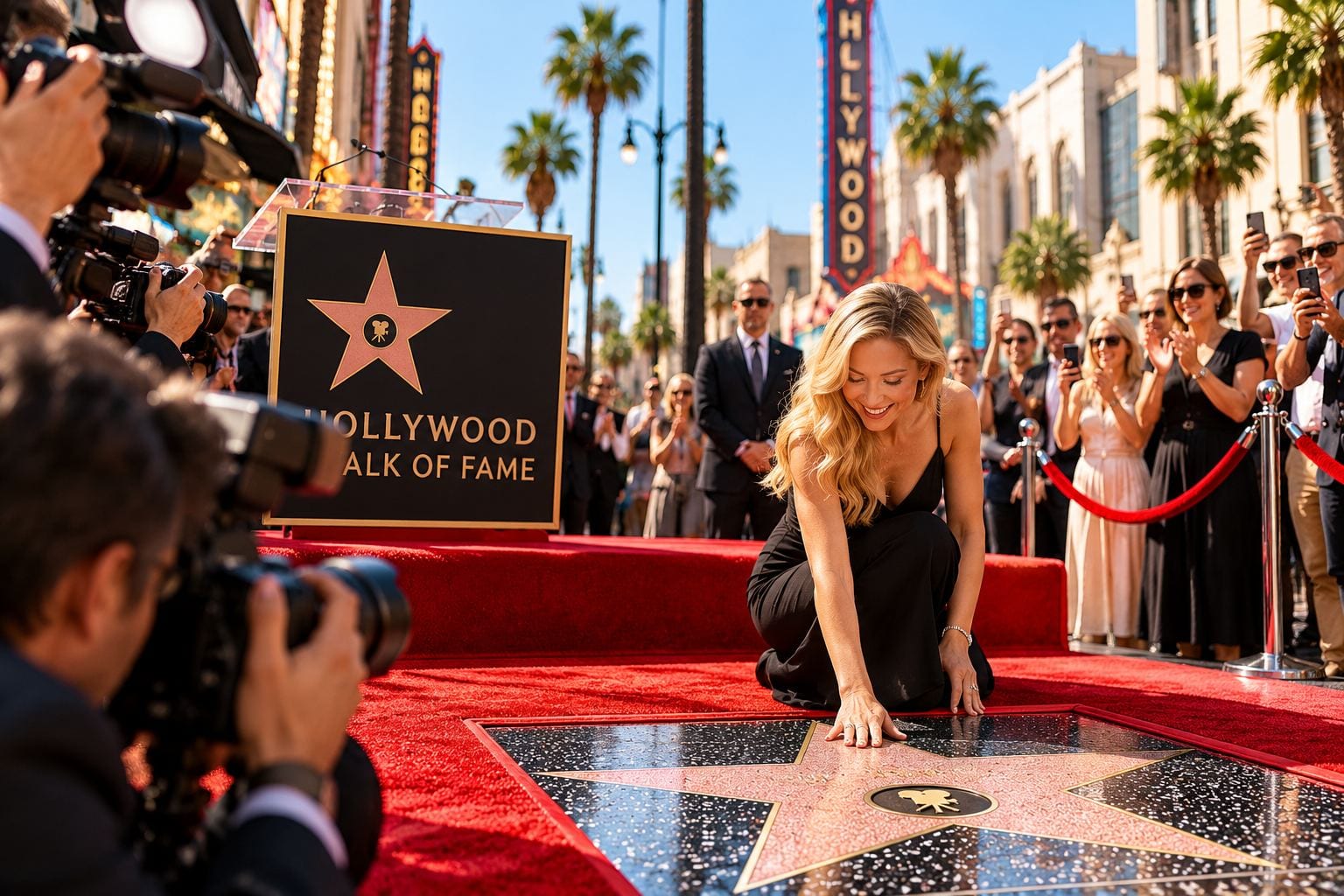 AI-generated editorial illustration of a fictional Hollywood Walk of Fame star-unveiling ceremony. The people and event depicted are not real. |
Why was the Hollywood Walk of Fame created?The Walk began as a commercial and civic improvement effort, not simply an awards program. Hollywood business leaders wanted to honor the entertainment industry while attracting attention and visitors to the neighborhood. Its unusual achievement is that a local promotion became an internationally familiar symbol while remaining embedded in ordinary public space. For residents, the Walk can be both a source of pride and a busy stretch of pavement that must accommodate tourists, commuters, businesses and maintenance crews. Those competing uses are part of the real story, too. Hollywood is a place where entertainment history and daily life occupy the same block. The next time a crowd gathers around a newly unveiled star, remember the people who first imagined those names underfoot. The Walk of Fame was built one practical decision at a time. Its enduring trick is making that considerable work look like a little Hollywood magic. |
More from Hollywood Local Pulse
Oct 19, 2026
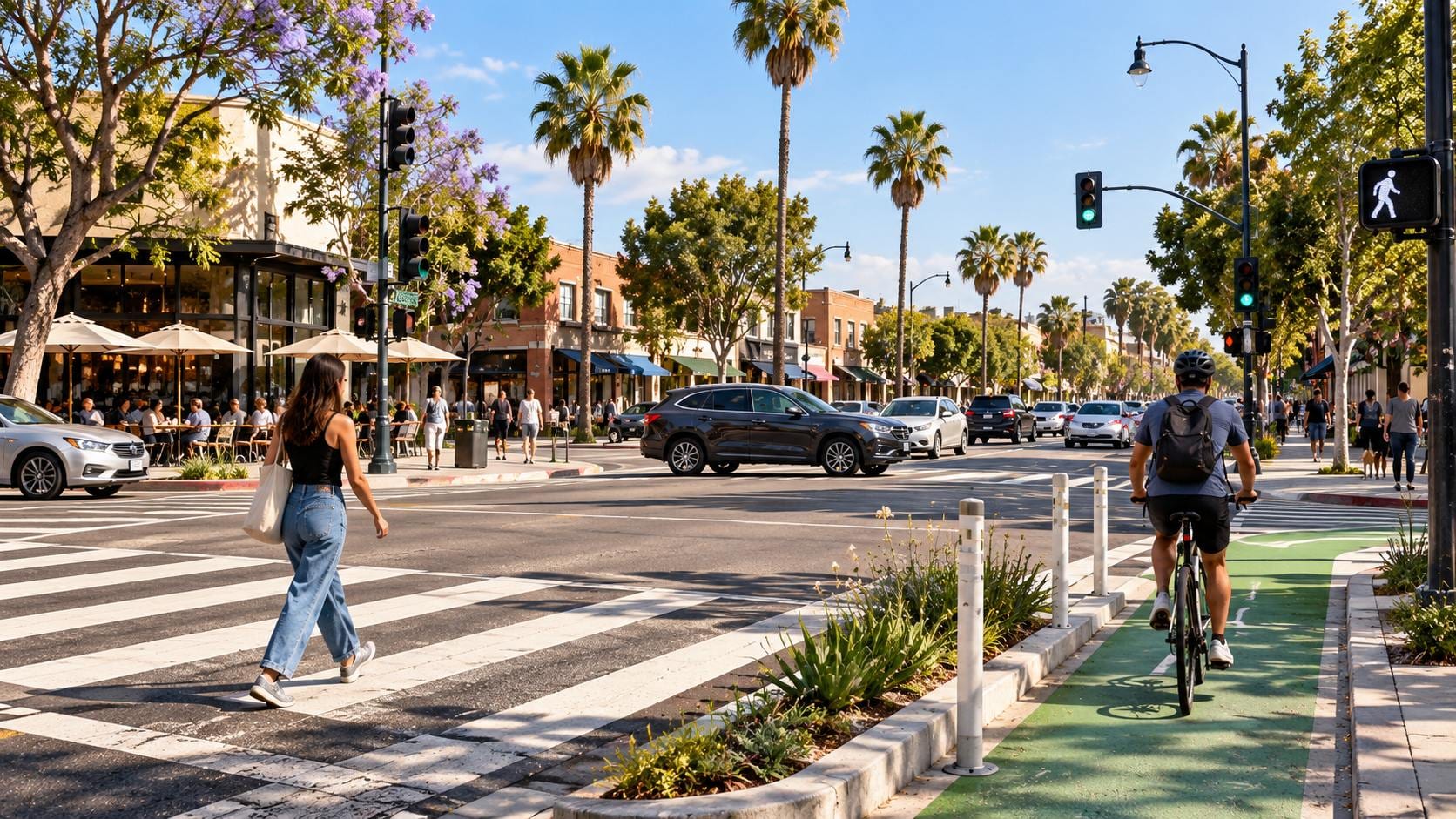
Hollywood Six-Way Intersection Redesign: What LADOT Proposes
A proposed redesign at Hollywood, Sunset, Virgil and Hillhurst aims to improve crossings and connect protected bike lanes.
Oct 15, 2026
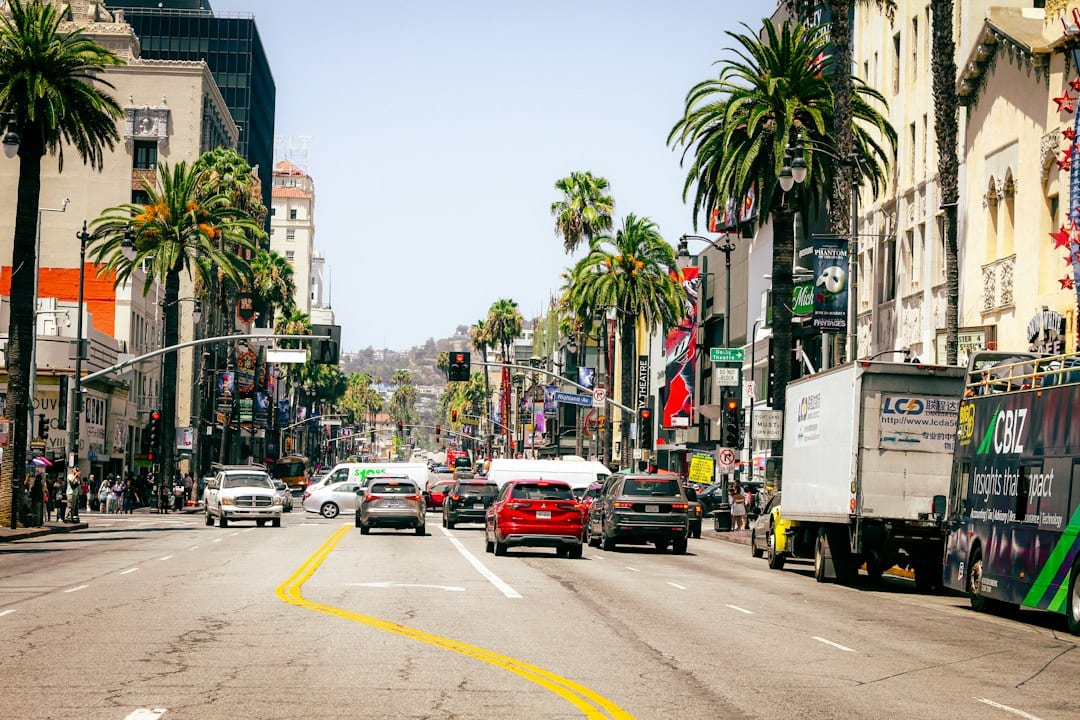
Hollywood Next Summit Puts Investment, Jobs and Film Production in Focus
Hollywood Next 2026: Hollywood Chamber discusses film incentives, 9.8 million district visits, Hollywood Boulevard proposals and a 2027 investment roundtable.
Oct 14, 2026
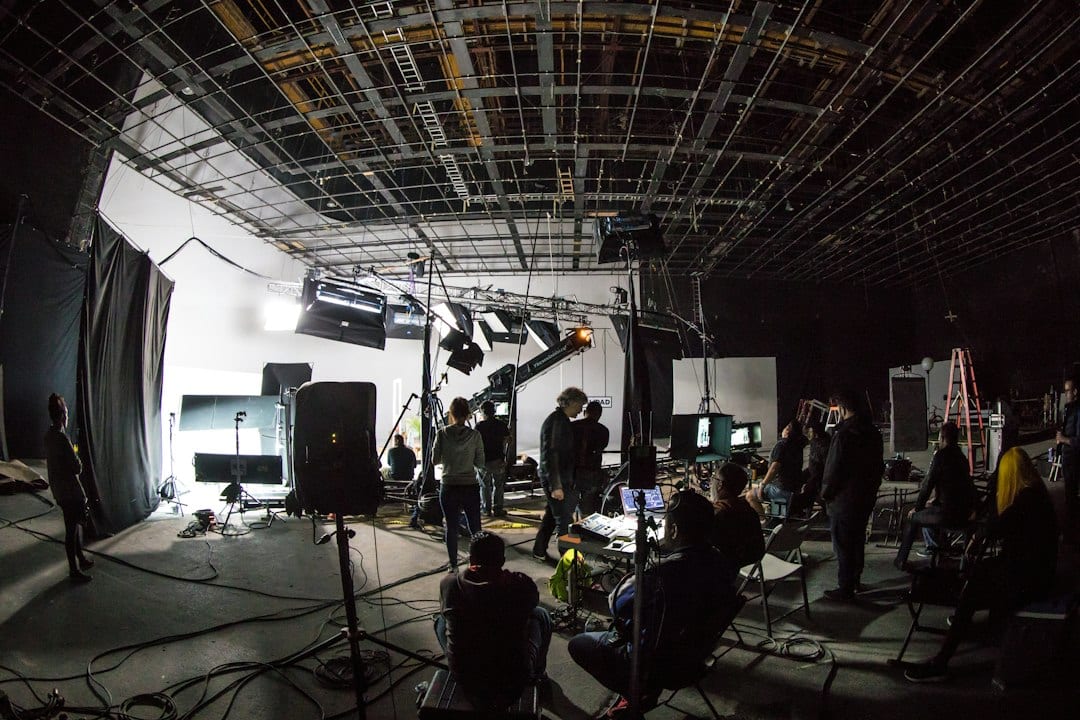
Hollywood's $450 Million Echelon Studios Takes Shape
A new five-stage studio campus rises on Santa Monica Boulevard as local production faces economic headwinds.
Oct 12, 2026
Hollywood Burbank Airport New Terminal: October 13 Opening
Hollywood Burbank Airport's new terminal opens October 13. Find the new entrance, parking changes and what Elevate BUR means for travelers.
0 Comments
Join the conversation
Be the first to comment
Share your thoughts above.