Hollywood’s Future Underground Rail Connection: What Metro’s K Line Plan Means |
The route toward Hollywood has been chosen. The opening is still years away. |
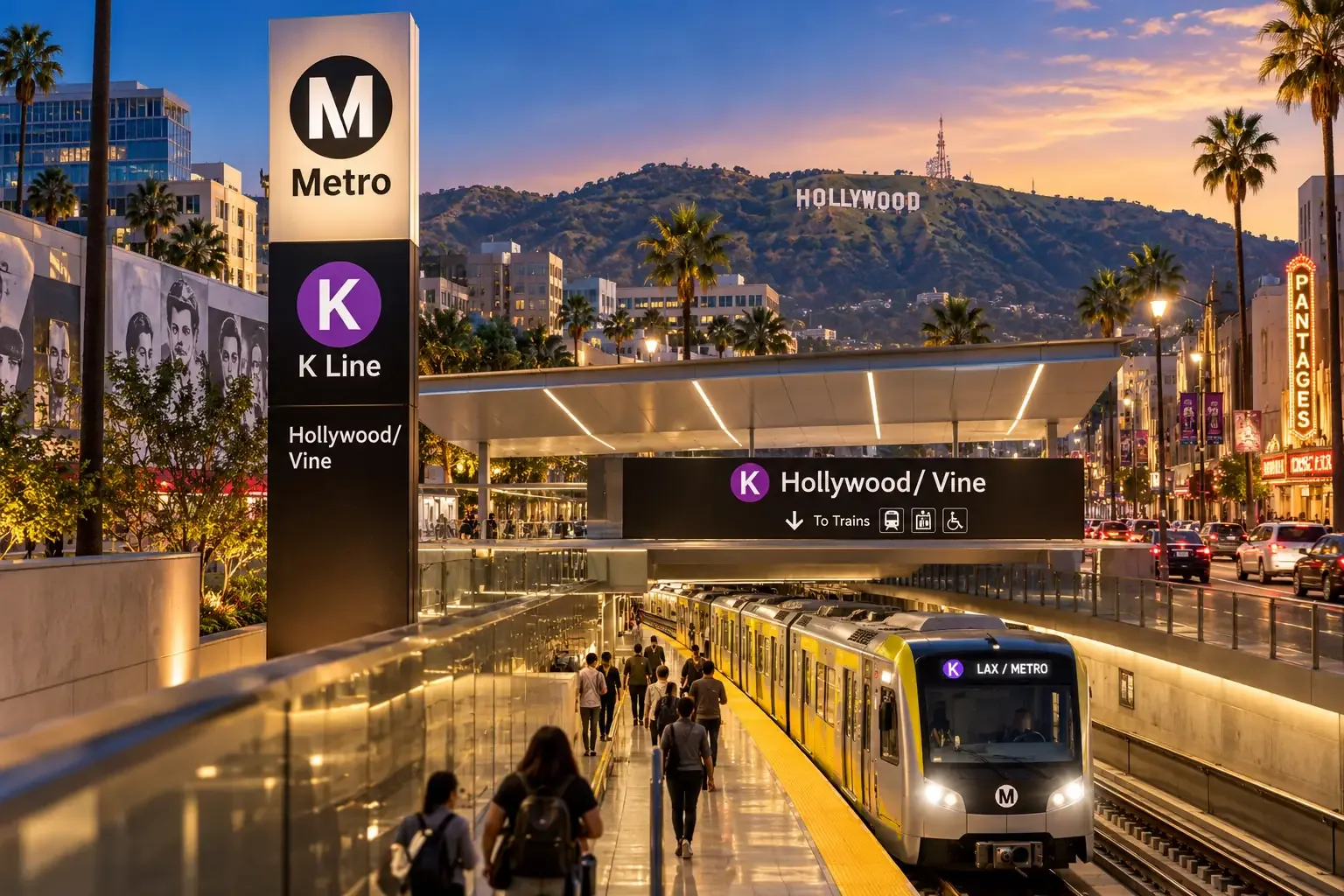
Hollywood has always been good at making an entrance. Metro's next big idea is about making the trip here easier—without another round of negotiating the 101, hunting for parking, or studying a traffic map like it's a final exam. The proposal is called the K Line Northern Extension: a planned underground light-rail route linking the existing K Line near Expo/Crenshaw with Mid-City, West Hollywood, and Hollywood. It would meet the B Line at Hollywood/Highland and, under the route selected by Metro's board, continue toward a proposed Hollywood Bowl terminus. That sounds like tomorrow's commute. It isn't. Metro has selected a preferred route, but the project remains in planning, with major funding, environmental, design, and construction steps ahead. Here's what the decision means—and what it doesn't. A route selected, not a ribbon cutOn March 26, 2026, Metro's board selected the San Vicente–Fairfax alignment as its locally preferred alternative. In everyday language, that means the agency chose the route it wants to advance through the next stages. It does not mean every station design is final, construction is underway, or an opening date is guaranteed. The decision was also conditional: Metro tied its choice to formation of an Enhanced Infrastructure Financing District by West Hollywood in coordination with Los Angeles County, intended to supply additional local funding under an early-delivery strategy. The board called for continued community engagement and further technical review in Mid-City. Metro's official K Line Northern Extension project page is the best place to track those milestones. |
What route will the K Line Northern Extension take through Hollywood?The selected alignment would run roughly ten miles underground, generally following the San Vicente and Fairfax corridors on its way north. Metro describes ten new stations and an estimated 19-minute trip between the E Line and the B Line once the entire extension is operating. That figure is a planning estimate, not a timetable for trains you can board today. The route is intended to reach destinations that can feel frustratingly close on a map and surprisingly far apart by car: Museum Row, the Grove and Original Farmers Market area, Cedars-Sinai, the Pacific Design Center, and West Hollywood's Santa Monica Boulevard corridor. Hollywood's connection would tie into the existing B Line, with the Hollywood Bowl included in the board-selected terminus plan. Will the K Line connect directly to Hollywood/Highland?That is the plan. Metro's selected project would connect to the existing B Line station at Hollywood/Highland. The exact station construction and passenger experience still depend on later design and approvals. The K Line is light rail even though this proposed segment would run underground. |
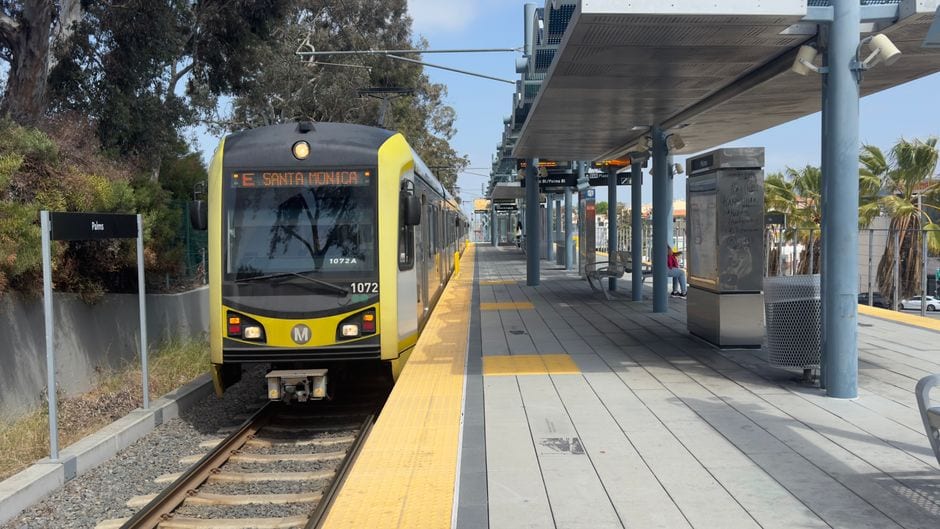 An existing Metro train at the Palms station illustrates the light-rail system; this is not the future Hollywood underground extension. Photograph: Edwin Flores / Pexels. |
Why this matters to HollywoodHollywood already has a rail connection, but its B Line runs primarily east and south toward Downtown Los Angeles or north toward the Valley. The proposed K Line extension would add a different kind of journey: a north–south rail path through West Hollywood and Mid-City, with transfers that could make some cross-city trips possible without detouring through downtown. For someone coming to a show, working a late shift, visiting a medical appointment, or meeting friends across town, that could mean another practical choice. It could also change how people reach Hollywood Boulevard and the Bowl. But those are potential benefits, not promises of specific door-to-door savings: walking distances, train frequencies, accessibility, and the final station layouts will matter. Would the extension replace the existing Hollywood subway?No. It would add a new line and transfer opportunities. The B Line would remain part of Hollywood's rail network; the K Line would connect with it rather than take its place. Metro says the longer network would link the K Line with the B, C, D, and E Lines. That is the big-picture attraction: more ways to travel across the region without making Downtown Los Angeles the required transfer point for every trip. |
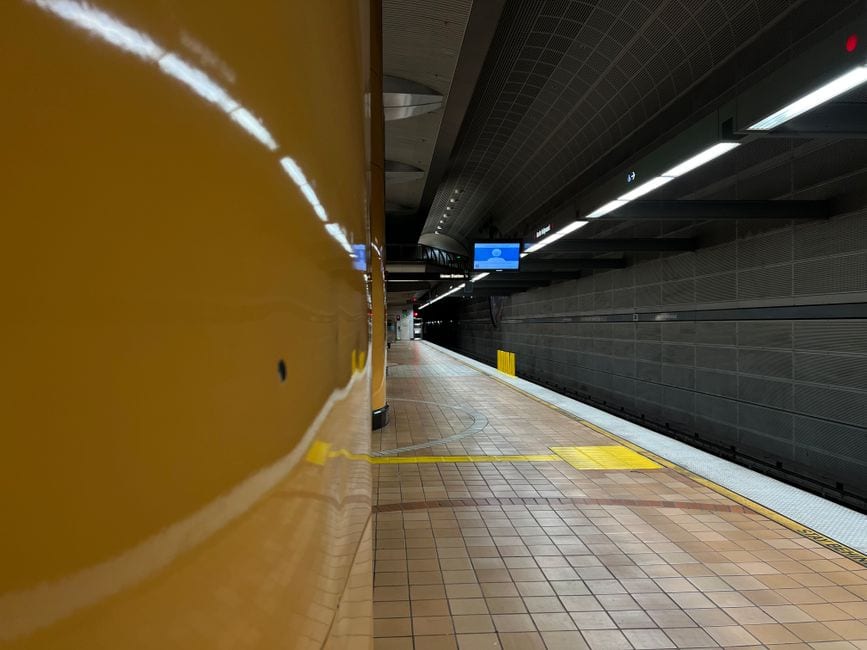 An existing Los Angeles subway platform offers a view of the passenger experience today; it is not a rendering of a future K Line station. Photograph: Wal Saravia / Pexels. |
What is decided—and what is still open?The route selection is real. So are the unanswered questions. Metro's board materials call for additional work on Mid-City tunnel alignment, property and historic-neighborhood concerns, and cost reduction. The locally preferred route was chosen with a funding condition, and selecting it is not the same as securing all money needed to build the line. Metro's March 2026 board report explains the decision and its conditions. Those details are worth remembering whenever a headline makes the project sound closer than it is. When will the Hollywood K Line extension open?Metro currently estimates 2047–2049. Its project page says construction funding is expected to become available in 2041 under the baseline schedule. Early delivery is being explored, but an accelerated opening is not assured. Treat those years as planning estimates, not tickets for a specific opening day. That long horizon is one reason this story matters now. A route choice can shape future decisions about public funding, neighborhood impacts, and station access long before the first passenger arrives. |
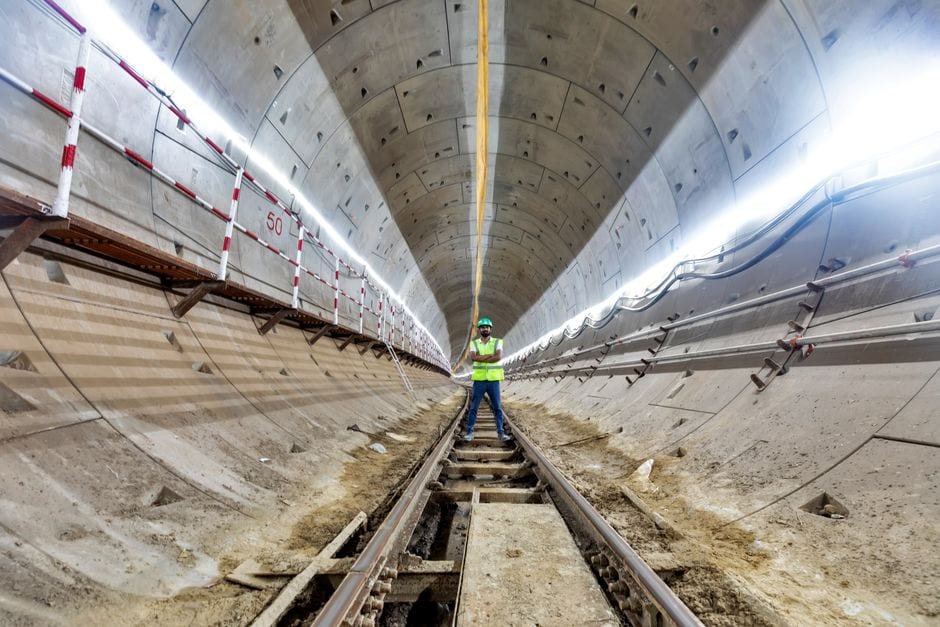 An engineer inspects an underground construction tunnel in a generic illustrative photograph. This is not a K Line worksite. Photograph: Anil Sharma / Pexels. |
How to follow the project without getting lost in the jargonTransportation plans come with their own vocabulary. A locally preferred alternative is the route an agency selects to advance. An environmental impact report studies possible effects and mitigation. A financing district is a potential way to direct future revenue toward infrastructure. None of those phrases means a station is ready to open. Is the Hollywood Bowl station guaranteed?No. The Metro board's selected plan includes a Hollywood Bowl terminus, but the project still faces funding, design, environmental, and delivery decisions. It is more accurate to call it planned than completed or guaranteed. Residents can compare the current proposal with Metro's official project questions and answers, which explain transfers, underground construction, and the planning process. The City of West Hollywood's project information provides another local perspective on the selected corridor. A future connection worth watchingHollywood's next underground rail story is not about a grand opening. It's about a consequential decision on the map, followed by years of work to turn a line on paper into a line people can ride. For now, the most useful question isn't whether you can catch the train next weekend. It's whether the route, funding, and station designs eventually deliver a connection that works for the people who live, work, and spend time here. Hollywood knows how to wait for a premiere. This one will require a little more patience. |
0 Comments
Join the conversation
Be the first to comment
Share your thoughts above.