Hollywood Forever: The Cemetery Where Hollywood History Is Still Very Much Alive |
Founded before Hollywood became the movie capital of the world, this cemetery now holds film legends, summer movie nights, concerts and one of Los Angeles’ most remarkable Día de los Muertos celebrations. |
There are places in Hollywood where the past feels carefully preserved.
And then there is Hollywood Forever, where the past is quite literally all around you—and somehow the place still feels remarkably alive.
If you've only thought of it as the cemetery behind the walls on Santa Monica Boulevard, you're missing most of the story.
Hollywood Forever was here before Hollywood became Hollywood.
It Started in 1899The cemetery was founded in 1899, years before the film industry transformed the neighborhood into the entertainment capital we recognize today.
That timing matters.
When the cemetery opened, there was no Walk of Fame, no Hollywood Sign, no Academy Awards and no studio system turning actors into worldwide stars.
The neighborhood's most famous chapter had not started yet.
Then the movies arrived.
Paramount Studios was eventually built on the undeveloped southern portion of the cemetery's original land, and the two properties still sit side by side today.
There is something wonderfully Hollywood about that geography: one place creating movies, the other holding generations of people who helped create the industry around them.
Hollywood Forever was added to the National Register of Historic Places in 1999, exactly a century after its founding.
A Walk Through Hollywood HistoryThe list of people buried here reads like an unusually eclectic Hollywood credits sequence.
Judy Garland. Cecil B. DeMille. Rudolph Valentino. Mickey Rooney. Tyrone Power. Douglas Fairbanks. Johnny and Dee Dee Ramone. Chris Cornell.
And those are only some of the names visitors come to remember.
But Hollywood Forever is not simply a celebrity scavenger hunt.
Thousands of neighborhood residents and families are buried here too, which is important to remember when you walk the grounds.
This is a historic landmark, yes.
It is also still somebody's cemetery.
|
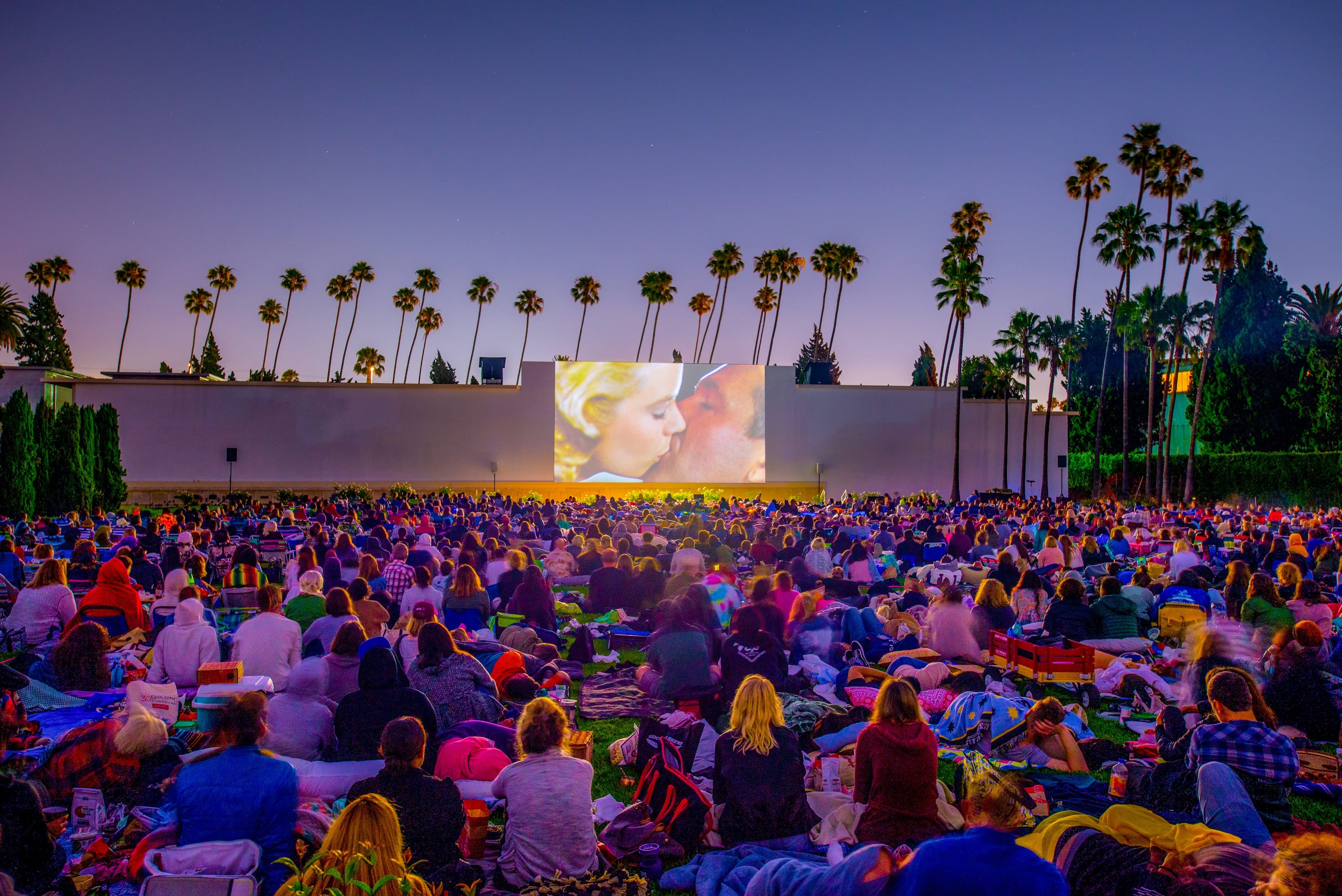 A Cinespia outdoor movie screening on Fairbanks Lawn at Hollywood Forever. Photo source: Frommer’s. |
Then Hollywood Brought the Movies BackHere is where the story takes a turn I don't think anyone standing there in 1899 could have predicted.
On summer nights, thousands of people now spread blankets across Fairbanks Lawn to watch movies under the stars.
Hollywood Forever has partnered with Cinespia for outdoor screenings for more than two decades. The films are projected against the side of a mausoleum while people picnic on the grass.
Read that sentence again.
Hollywood watches old movies in a cemetery next to a movie studio.
If there is a more perfectly Hollywood way to spend an evening, I'm not sure what it is.
The screenings have become their own local ritual: blankets, low chairs, picnic baskets, DJs before the movie and a crowd reacting together to films many of them already know by heart.
There is something unexpectedly moving about seeing an old film surrounded by the resting place of people who helped build the world those films came from.
A Cemetery That Became a Cultural CenterThe transformation didn't stop with movies.
Hollywood Forever also hosts concerts, talks, performances, live podcast events and other cultural programming.
The official Hollywood Forever website keeps the current calendar, visitor information and cemetery resources in one place.
And each year, its Día de los Muertos celebration brings color, music, art, memorial altars and families together across the grounds.
Hollywood Forever describes the event as one of its defining cultural traditions, and it has grown into one of Los Angeles' major celebrations of remembrance.
That may sound unusual until you think about what cemeteries have always been for.
They are places where the living come to remember.
Hollywood Forever simply does that in a very Hollywood way.
|
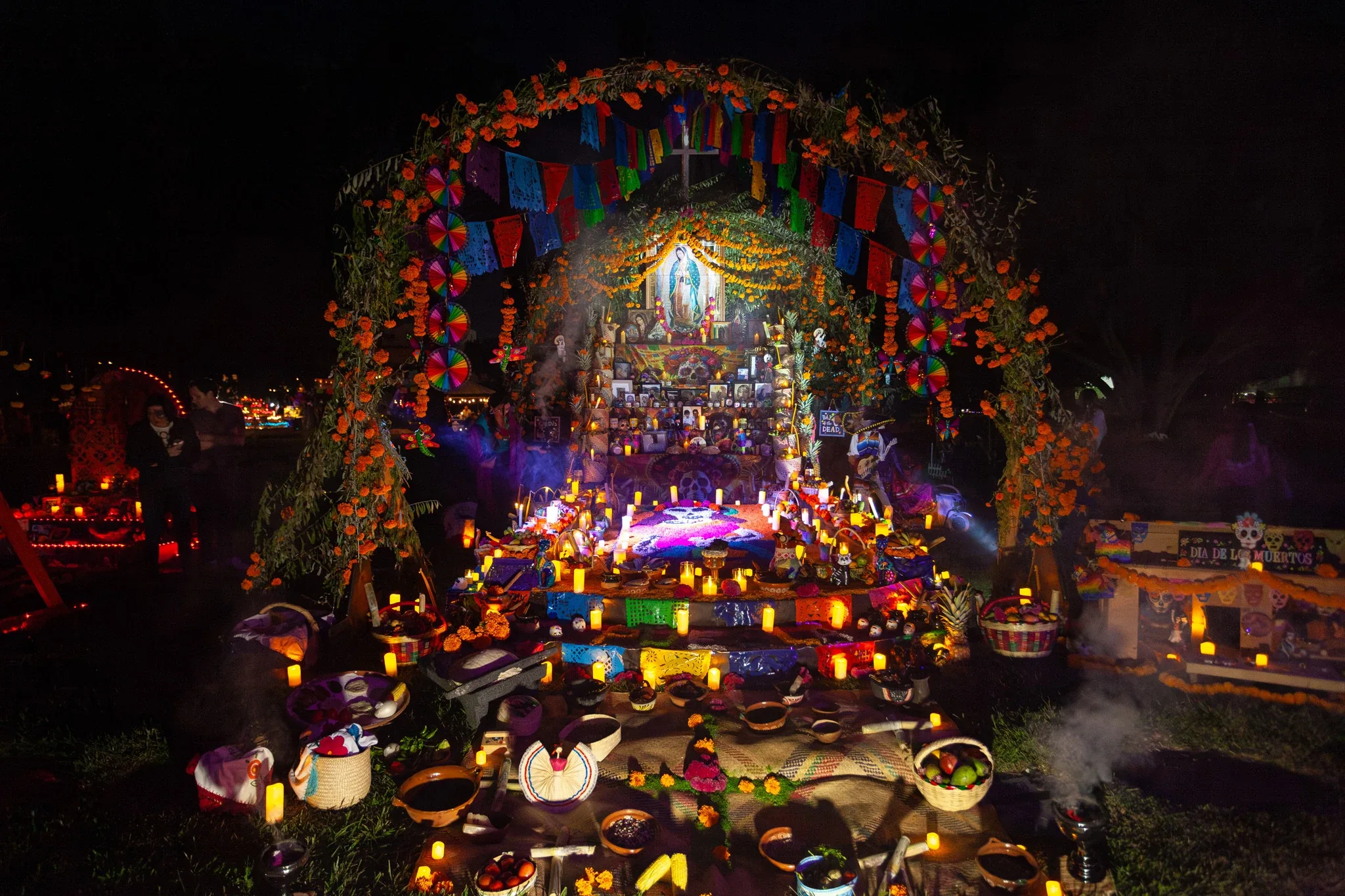 A Día de los Muertos altar at Hollywood Forever. Photo source: Time Out Los Angeles. |
Some Stories Refuse to EndOne of the most enduring traditions here belongs to silent-film star Rudolph Valentino. Admirers have gathered to remember him at Hollywood Forever for nearly a century, and the annual memorial has become one of Hollywood's longest-running traditions.
That says something about fame, but it also says something about memory.
Hollywood is famous for moving on quickly.
New movie. New star. New restaurant. New building.
But inside these gates, people keep coming back.
Go SlowlyIf you visit Hollywood Forever, don't rush it.
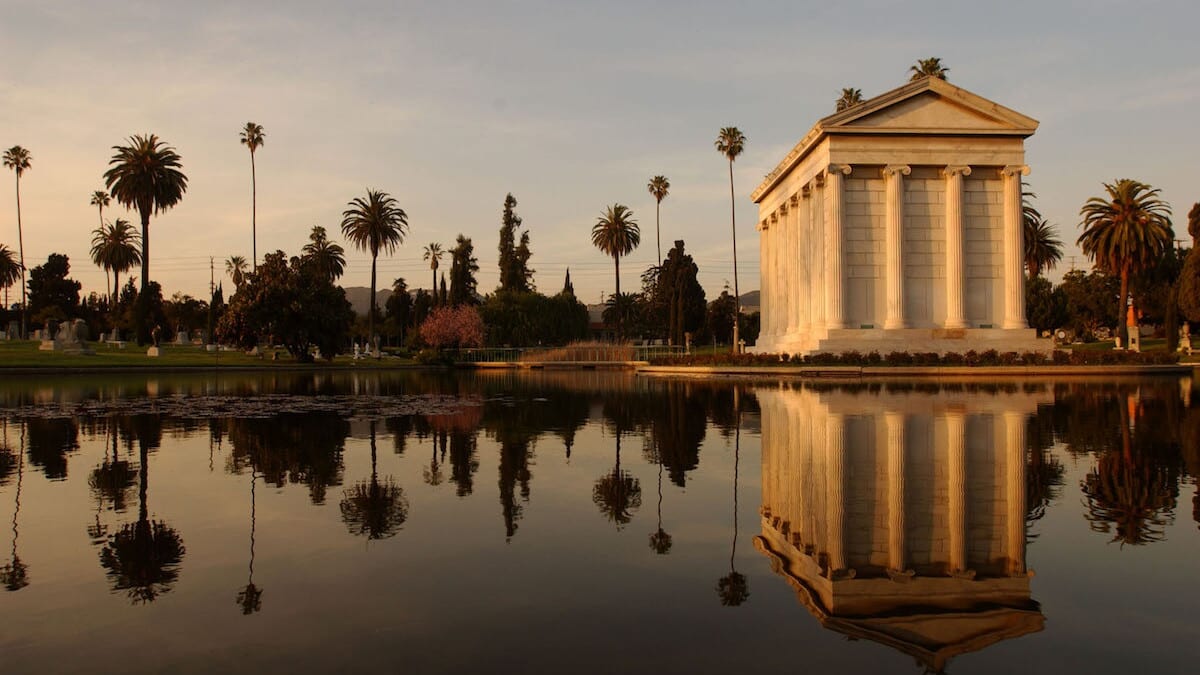
Notice the mausoleums reflected in the water.
Notice the palms and the open lawns.
Notice Paramount rising just beyond the cemetery boundary.
And remember that this property has watched Hollywood change for more than a century—from a small community to an industry town to a global symbol.
A cemetery might sound like a strange place to look for life.
Hollywood Forever makes a pretty convincing argument otherwise.
Hollywood has a way of hiding extraordinary stories in places we think we already understand. If you'd like me to keep finding them, subscribe to Hollywood Local Pulse. I have a feeling we're only getting started.
— Ms. V
|
0 Comments
Join the conversation
Be the first to comment
Share your thoughts above.