Barnsdall Art Park: The Hollywood Hilltop Built for Everyone |
How Aline Barnsdall’s bold artistic dream became a public hilltop of architecture, classes, and culture. |
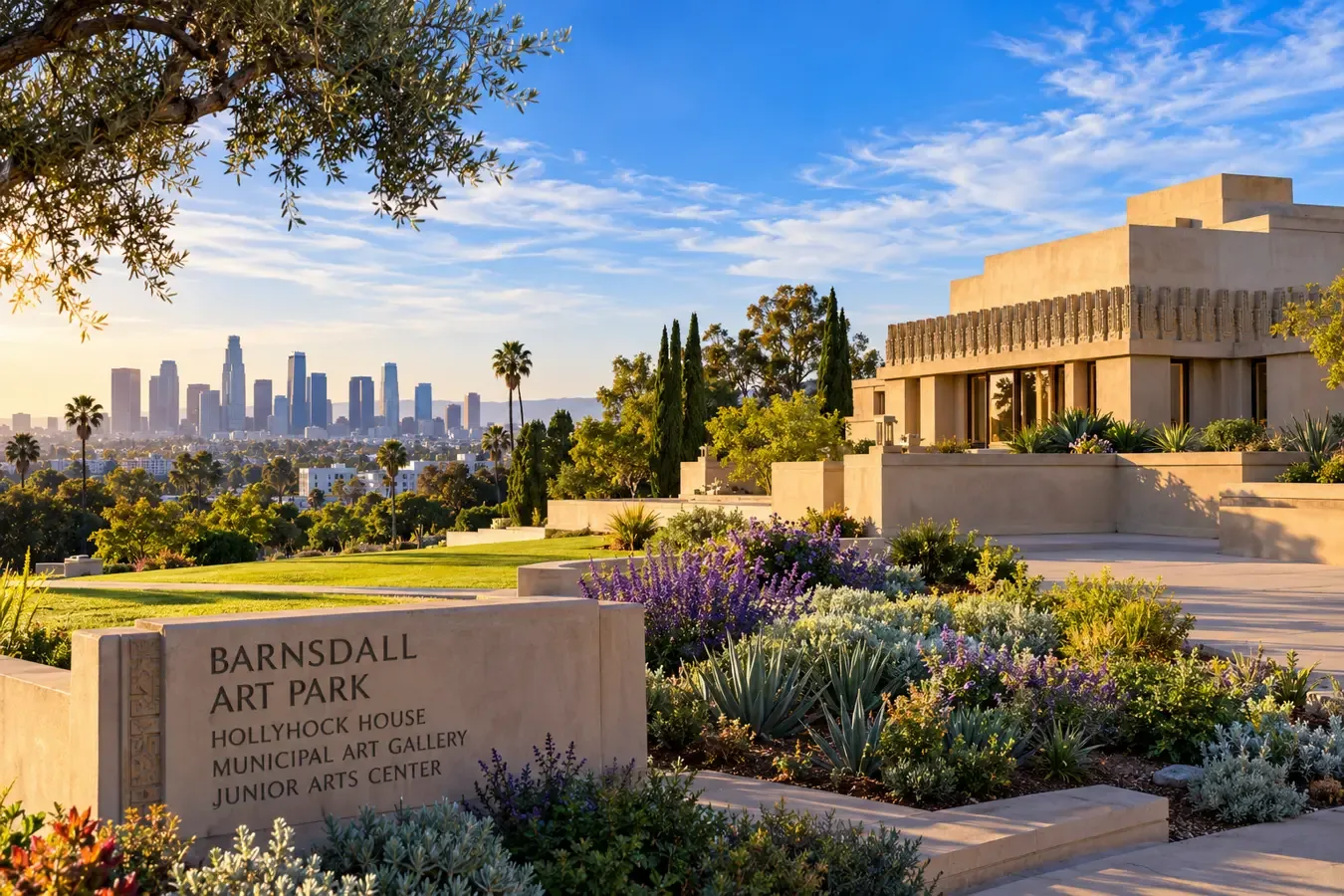
Hollywood Boulevard is usually a place to keep moving. Cars move, signs flash, and somebody is always trying to get somewhere five minutes ago. But near Vermont Avenue, a road climbs away from the boulevard toward a hilltop with a very different idea of what a city should be: a place to make art, see art, and simply sit for a while. That hilltop is Barnsdall Art Park. It holds one of Los Angeles’s most remarkable architectural landmarks, but its larger story belongs to the woman who imagined culture as a public good—not a private luxury. Aline Barnsdall Had a Bigger Plan Than a HouseIn 1919, Aline Barnsdall bought a large property on Olive Hill with ambitions that extended well beyond building a comfortable Hollywood residence. An oil heiress, theater producer, and patron of experimental art, she envisioned a place where performance and creative work could flourish. She enlisted Frank Lloyd Wright to help turn the idea into architecture. The project changed as it unfolded. A proposed theater and arts complex evolved into a plan centered on Barnsdall’s residence, the building now known as Hollyhock House. Wright’s work on the property began in 1919; construction continued through 1921, and the broader vision was never fully realized. What survived, though, would prove surprisingly influential. The hill was not meant to be just another impressive address. Barnsdall wanted art to have a home in the life of the city. That intention matters because it helps explain why this place is a public park rather than a private estate behind a gate. |
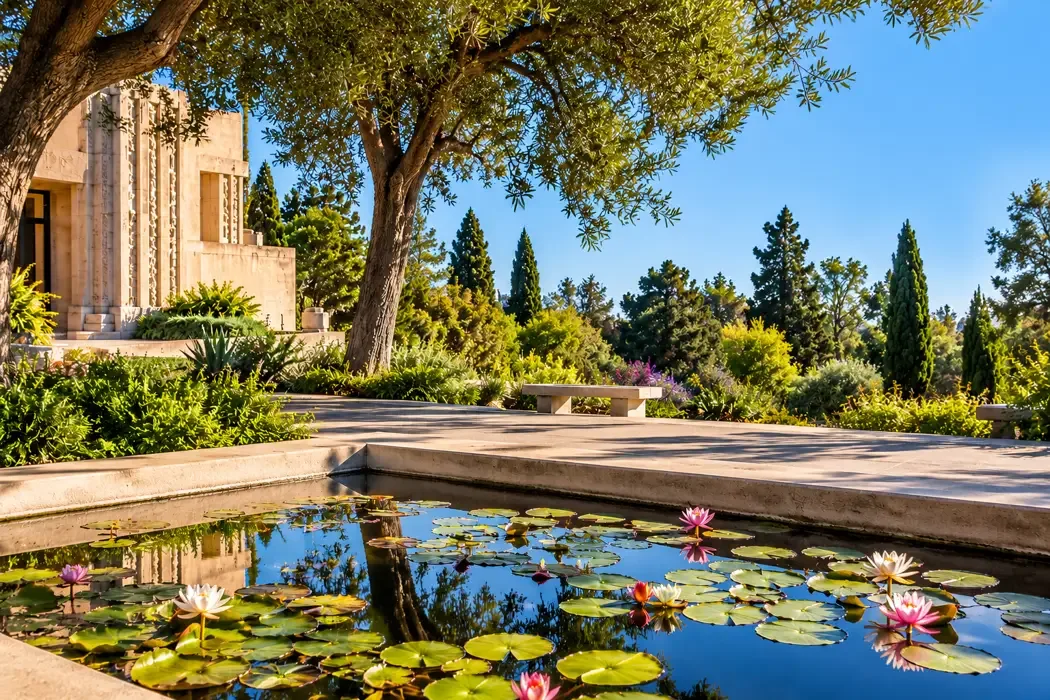 AI-generated editorial illustration of a garden terrace and lily pond; not a documentary photograph of Barnsdall Art Park. |
The House With a Flower in Its WallsHollyhock House takes its name from Barnsdall’s favorite flower. Wright turned the hollyhock into a repeated geometric motif, working stylized versions of the plant into decorative stone, furniture, textiles, and art glass. It is architecture that asks visitors to look twice: the flower is there, but not quite as nature drew it. The building also shows Wright exploring a distinctly Southern California relationship between interior rooms and outdoor space. The result is neither an ordinary house nor a conventional monument. It is a design experiment rooted in the hill, its gardens, and the idea of living with the landscape. Wright’s son Lloyd Wright and architect R. M. Schindler helped bring the project to completion. Both would go on to leave their own marks on California architecture. The hilltop was a place where several important architectural stories briefly crossed paths. |
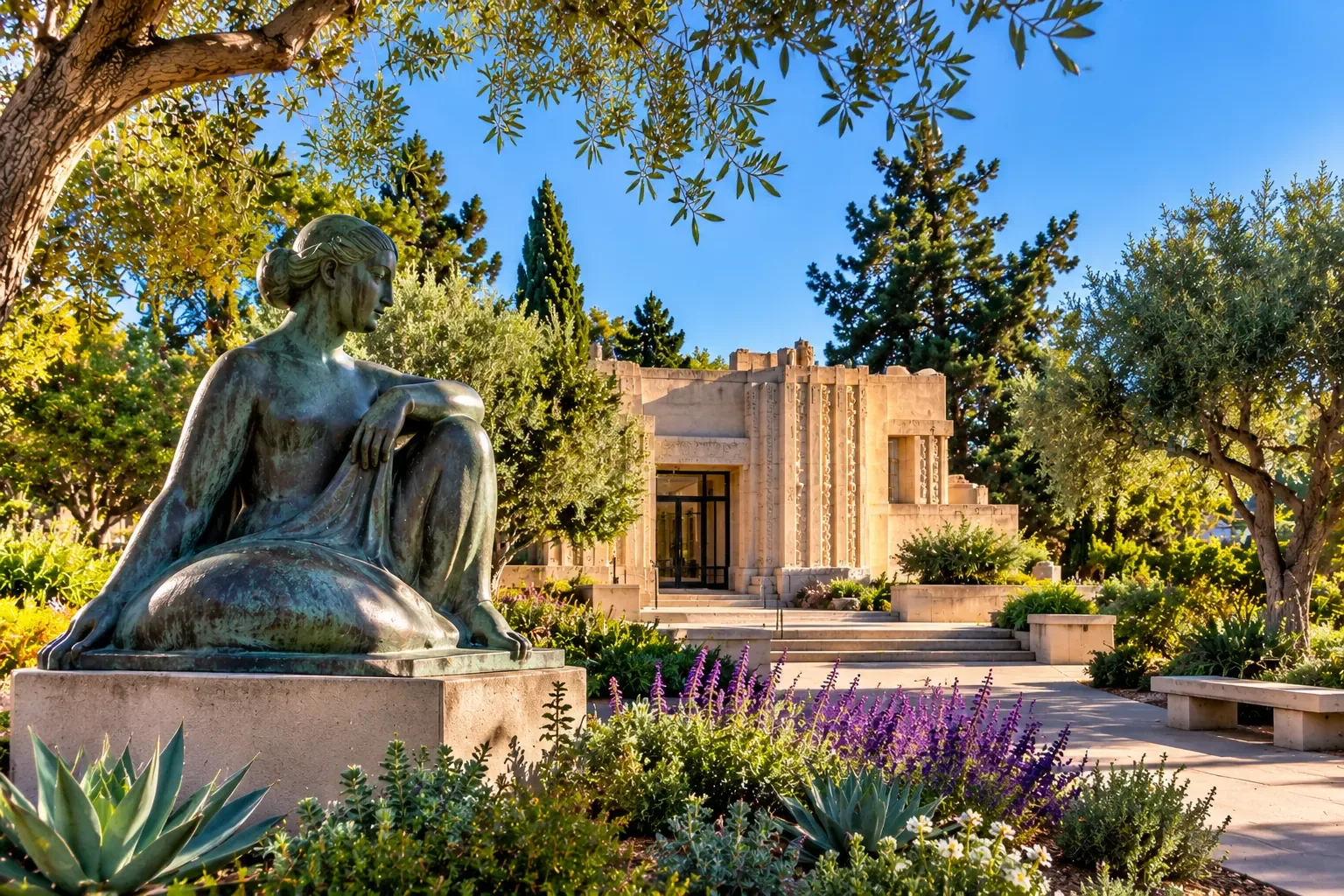 AI-generated editorial illustration of sculpture and landscaped arts grounds; not a documentary photograph of Barnsdall Art Park. |
Why Is Hollyhock House Famous?Hollyhock House is celebrated for its innovative design and its place in Frank Lloyd Wright’s architectural legacy. In 2019 it became Los Angeles’s first UNESCO World Heritage Site, included with seven other Wright buildings in a group inscription recognizing his influence on modern architecture. That distinction belongs specifically to Hollyhock House—not to every building in Barnsdall Art Park. |
KCET explores the restoration and revival of Hollyhock House, offering a closer look at the architecture behind Barnsdall Art Park. |
The Gift That Changed Olive HillIn 1927, Barnsdall gave the house and surrounding land to the City of Los Angeles. The donation transformed her ambitious private project into a public cultural landscape. The city’s own history of the park describes her hope for an accessible arts center, with Hollyhock House preserved as part of its purpose. It is a striking turn in the story. A woman who had dreamed of staging experimental theater on a Hollywood hill left the city something that could outlast any single production: space for people to encounter art and, just as importantly, try making it. That promise developed over decades. The adult arts program began in 1946, the junior arts center followed in 1967, and the Los Angeles Municipal Art Gallery and Gallery Theatre opened in 1971. Barnsdall became a place of classrooms and exhibitions as well as celebrated architecture. Is Barnsdall Art Park Free to Visit?The park’s public green spaces are generally accessible without a Hollyhock House ticket. Individual activities, classes, exhibitions, and house tours have separate schedules or admission rules. The city lists the park’s outdoor green-space hours on its official park page; check the current information before visiting rather than assuming every building is open whenever the lawn is. A Working Arts Center, Not Just a LandmarkIt would be easy to let Hollyhock House take all the attention. It is the famous one, after all. But Barnsdall’s quieter success may be the creative work happening around it. The Barnsdall Arts Center offers adult instruction in disciplines that include drawing, painting, ceramics, jewelry, fiber art, and photography. The Junior Arts Center develops programs for children and young people. These are not museum displays of creativity; they are places where someone can arrive without knowing how to throw a pot or draw a convincing hand and begin learning. The Los Angeles Municipal Art Gallery adds another dimension through exhibitions and educational programming. Together, the institutions make the park something unusual: a historic landmark that still functions as an arts campus. The city has preserved an important architectural experiment while continuing to make room for new work. What Can You Do at Barnsdall Art Park?Visitors can enjoy the grounds and views, explore exhibitions when the gallery is open, look into arts classes, and arrange a Hollyhock House tour when tickets are available. Because these are separate facilities, hours and reservations differ. For classes, consult the official Barnsdall Arts program; for the historic house, use the City of Los Angeles Hollyhock House visitor information before planning a trip. |
A Hilltop That Still Belongs to HollywoodBarnsdall Art Park sits at 4800 Hollywood Boulevard, yet its hillside setting can feel surprisingly removed from the street below. There is a useful contrast in that: one of the neighborhood’s most significant cultural spaces is not asking anyone to hurry. Its history is not perfectly tidy. The grand original complex was never completed, the buildings have needed restoration, and public arts institutions require ongoing care. But perhaps that makes the place more interesting, not less. It is not a frozen version of one person’s dream; it is what happened when that dream became a responsibility shared by a city. |
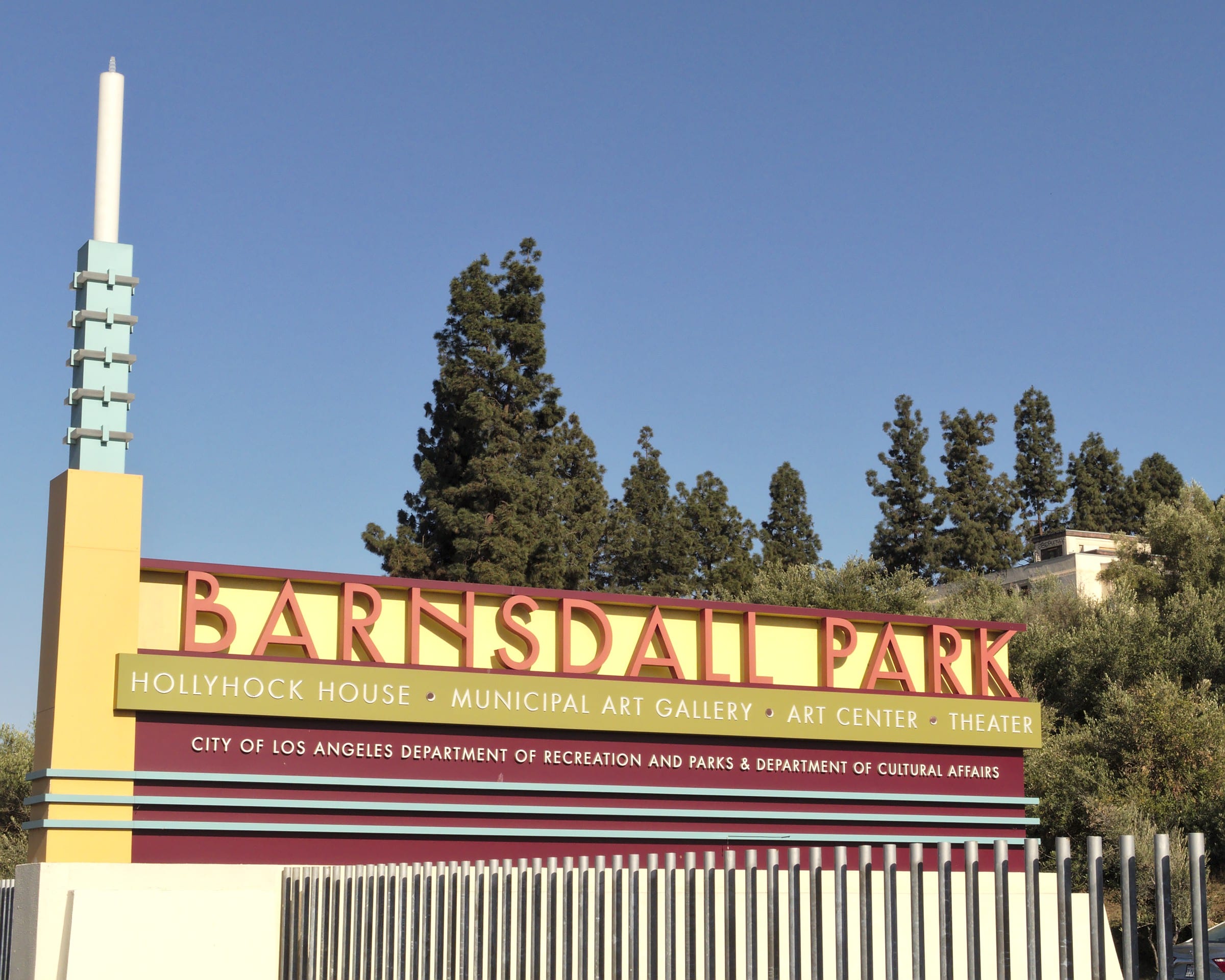 Barnsdall Art Park entrance signage on Hollywood Boulevard, photographed in 2015. CC0 photograph by Junkyardsparkle. |
Where Is Barnsdall Art Park in Los Angeles?Barnsdall Art Park is on Olive Hill at 4800 Hollywood Boulevard in East Hollywood, near Vermont Avenue. The city lists the green spaces as open daily, while facilities have their own operating schedules. For current access details, consult the official Los Angeles park listing. The next time Hollywood Boulevard feels like a place built only for passing through, remember the turn uphill. Aline Barnsdall left Los Angeles something more lasting than a spectacular house. She left room for the city to make something of its own. |
28 Comments
Join the conversation
Barnsdall could have kept Olive Hill to herself. I’m glad she had another idea.
I appreciate the quiet up there, but getting across Hollywood Boulevard on foot can be a lot.
The unfinished plan is almost more interesting to me than the house. What else did she hope to put there?
How did a private property become a city park? I’d like to know that part of the story.
It would be great to see more performances on the hill, given what Barnsdall originally wanted.
A place to sit for a while near Hollywood and Vermont sounds good to me.
I grew up nearby and always thought it was just a fancy old house. Never knew about the arts plan.
I wonder if the theater plan would have left as much open park space. I’m glad people can wander around now.
The view from up there is why I go. Knowing the history gives me another reason.
I’d be curious how much of Hollyhock House was Wright’s idea and how much came from Barnsdall.
My kid took an art class at Barnsdall. It’s nice to know that use fits what she wanted for the hill.
Does the park have anything explaining Barnsdall’s original vision? I missed it when I visited.
The idea of making room for art in a busy city still feels pretty relevant.
The house took years to build and the bigger plan still fell through. Sounds like building in LA hasn’t changed much.
I’m a little sad the theater never happened. That would have been something to see.
I pass that road near Vermont all the time and have never gone up. Maybe I should.
It’s hard to picture Hollywood Boulevard in 1919. Was Olive Hill already surrounded by buildings?
Hollyhock House is beautiful, but I’m glad the rest of us get to enjoy the hill too.
An oil heiress backing experimental art in 1919 is an interesting combination. I’d like to know what performances she produced.
I like the park, though I wish there were more places to sit in the shade on hot days.
Was any part of the proposed arts complex built, or did it stop with the house?
We used to sit up there after walking over from Vermont. I had no idea about the 1919 plans.
Frank Lloyd Wright gets the attention, but Barnsdall’s idea for the place is what interests me.
I’d love to see drawings of the theater Barnsdall had in mind. Sounds like a whole different hilltop.
It’s pretty generous that the hill became a public park instead of staying a private estate.
I’ve been to the park but never inside Hollyhock House. Is it open for tours?
That little climb off Hollywood Boulevard really does feel like leaving the traffic behind.
I never knew Aline Barnsdall wanted a theater up there. What happened to that part of the plan?